For kosher sushi similar to Yum Berry Cafe, look for a kosher dining spot where sushi sits alongside Japanese-inspired dishes, with a setting that suits the kind of outing you want. The closest fit depends on more than the rolls: menu variety and atmosphere can turn a quick meal into a relaxed café-style stop or a polished evening out.
It makes sense to want both a menu that feels appealing and a place where kosher dining is central to the experience. A thoughtful comparison starts with the food, then considers the mood, the range of dishes, and what shapes the overall bill.
Here, you’ll find the menu details and setting to look for, how to think about value without relying on a one-size-fits-all price, and what distinguishes a casual café visit from an elevated rooftop meal. The result is a clearer way to choose the experience that fits your plans and your appetite.
Key Takeaways
- Compare sushi variety, Japanese-inspired dishes, and café-style options to find a menu that fits your meal.
- Understand how menu choices, setting, and the kind of outing you have in mind shape what you spend.
- Use location and travel distance to narrow down kosher sushi options near Yum Berry Cafe.
- Find out what details to look for when comparing restaurants’ addresses, hours, and contact information.
- Consider G7 Rooftop for kosher Japanese-fusion dining in an elevated rooftop setting around the greater Miami area.
Kosher sushi and cafe offerings
A kosher sushi menu can pair familiar rolls with Japanese-inspired dishes, creating more choice than a sushi-only meal. Compare the range of sushi, other entrées, and café-style items before deciding whether a restaurant suits a quick lunch or a lingering dinner. For someone seeking kosher sushi similar to Yum Berry Cafe, the useful comparison is the complete dining experience, not one dish alone.
Start with the sushi section. Look for clear descriptions of rolls and other preparations, including their main ingredients and whether they’re served as individual pieces or larger plates. Then consider the rest of the menu: soups, salads, rice dishes, and cooked options can make a meal easier to share with guests who want something beyond sushi. These are examples of categories to compare, not claims about any specific restaurant’s menu.
Café offerings can change the feel of the visit. One place may emphasize a sit-down meal, while another may add lighter refreshments such as smoothies or frozen yogurt. Treat those items as separate menu categories rather than assuming every kosher restaurant carries them. A kitchen’s menu descriptions can help you understand whether its focus is sushi, a broader Japanese-inspired selection, or casual café fare.
Menu breadth matters when a group has different appetites. Compare the listed categories, then decide which dishes and setting best suit the occasion.
- Sushi: Note the variety of rolls and other preparations described.
- Other dishes: See whether cooked or lighter choices complement the sushi.
- Café items: Look for drinks, smoothies, or desserts if those suit your plans.
- Dining style: Consider whether the menu seems designed for a full meal or a brief stop.
Nearby restaurants don’t all follow the same service model. Dine-in, takeout, delivery, and catering are separate options, and each restaurant’s offering determines which formats are available. A menu designed for eating in may differ from selections prepared for takeout.
Customer reviews are most useful when they describe specific details, such as sushi freshness, menu variety, service pace, or atmosphere. Look for recurring comments about a particular dish or part of the visit instead of treating one positive or negative account as everyone’s experience.
For a balanced comparison, choose two or three menu categories that matter to you, then assess the restaurant’s selection and dining style against them. That simple step helps distinguish a sushi-focused meal from a broader café experience without assuming that every location offers the same dishes or services.
Price range
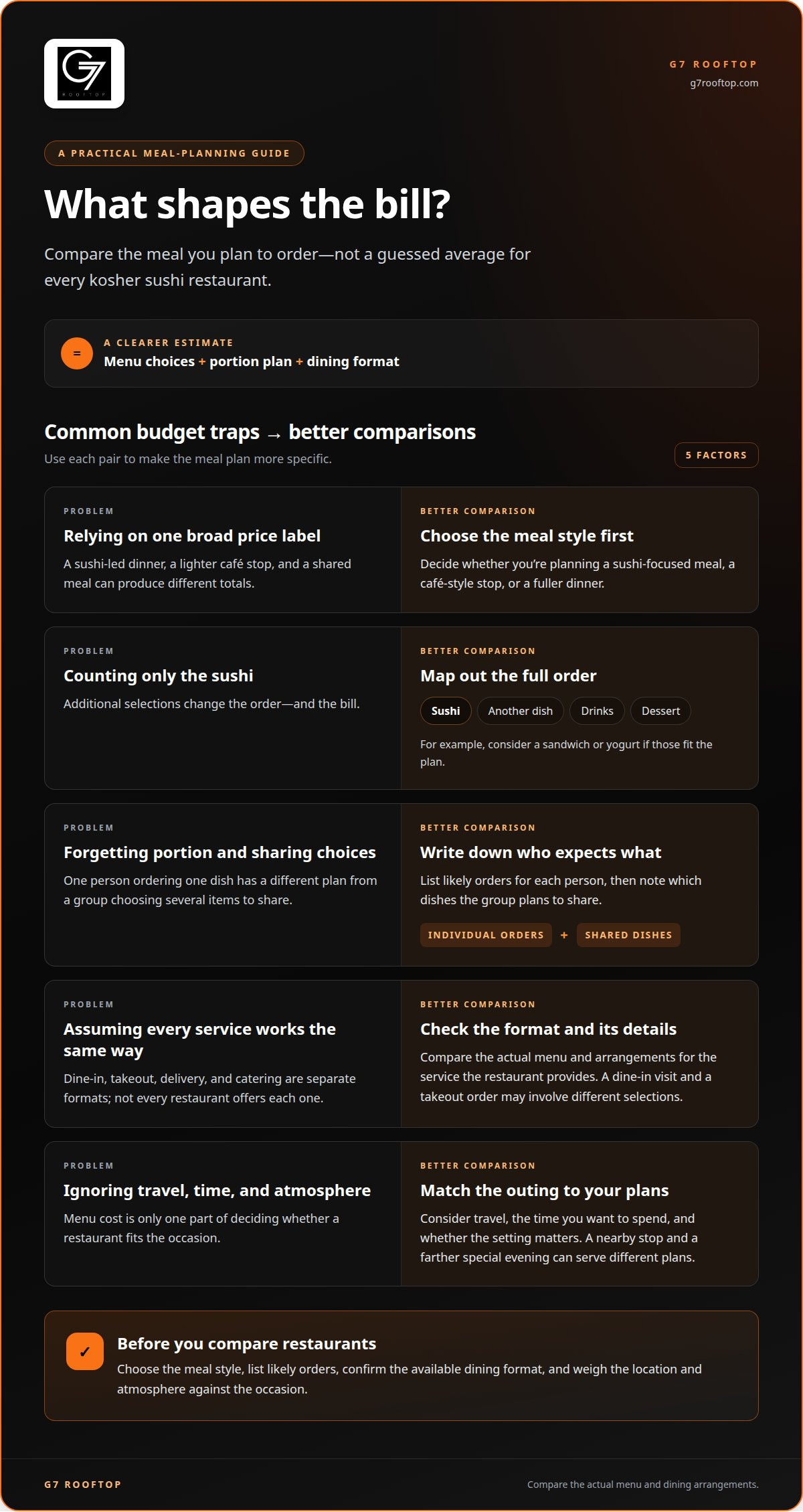
A useful budget starts with the meal you plan to order, not a guessed average for every kosher sushi restaurant. A sushi-led dinner, a lighter café stop, and a shared meal can produce different totals. In Hollywood, Florida, compare the menu categories and dining format before deciding what fits your plans. That approach is more reliable than treating every restaurant as though it offers the same experience.
Build your estimate from the choices on the menu. First, decide whether sushi is the main course or one part of the meal. Next, consider whether anyone in your party wants another dish, such as a sandwich, or a dessert like yogurt. Finally, account for drinks and any additional selections. Each choice changes the bill, so a sample order is more useful than a general price label.
Portion and sharing choices matter, too. A guest ordering one dish has a different meal plan from a group selecting several items for the table. For example, write down the dishes each person expects to order, then consider whether the group plans to share. This simple step helps distinguish a quick meal from a longer restaurant outing without relying on an unsupported dollar range.
Dining format can affect how you plan. A dine-in visit may include a broader meal, while takeout planning often centers on the dishes chosen for that order. Delivery or catering, where offered, can involve different selections and arrangements. These are distinct formats, not automatic features of every kosher restaurant. Compare the actual menu and service details that apply to your intended visit.
Location also shapes practical value. A restaurant located near your plans in Florida may suit a short stop, while a farther destination may feel worthwhile for a special evening. Think about travel, the time you want to spend, and whether the setting is part of the occasion. Those considerations help you judge value without confusing atmosphere with menu cost.
Use this quick planning sequence before choosing:
- Choose the meal style: sushi-focused, café-style, or a fuller dinner.
- List likely orders: include shared dishes, sandwiches, drinks, or yogurt if relevant.
- Set the format: dine-in, takeout, or another service the restaurant provides.
- Match the occasion: consider whether location and atmosphere matter to your plans.
For a specific dining estimate, the price depends on the selections and occasion, with cost shaped by menu choices and dining arrangements after a quote request. To discuss a plan for your visit, contact the restaurant with the occasion and dining details you have in mind.
What kosher sushi restaurants are near Yum Berry Cafe?
Use Yum Berry Cafe as the starting point for a local search, then compare kosher sushi restaurants by travel time and menu fit. “Nearby” depends on where you begin, your route, and whether you’re walking or driving. A map result’s distance alone may not show how convenient a restaurant is for your plans.
Start by entering Yum Berry Cafe and a phrase such as “kosher sushi” into a map app. Review the results around the cafe, then open each restaurant’s listing. Compare its address, estimated travel time, and menu information. This gives you a practical shortlist without assuming that every result serves sushi or operates as a kosher restaurant.
Next, check whether each candidate’s menu includes sushi alongside the other dishes you want. A restaurant with Japanese-inspired cuisine may suit a full meal, while a sushi-focused menu may better match a quick stop. For example, if your group wants both rolls and cooked dishes, prioritize places whose menus show both categories. Don’t treat a restaurant’s name or cuisine label as proof of its full selection.
Use these steps to make the comparison useful:
- Set the starting point: use Yum Berry Cafe or the location you’ll leave from.
- Compare routes: review travel time for the way you plan to get there.
- Review menus: look for sushi and any additional dishes your group prefers.
- Match the occasion: distinguish a quick meal from a longer sit-down visit.
For a visit in the greater Miami area, Hollywood, Florida, can also serve as a separate search area if it suits your route. It isn’t automatically close to Yum Berry Cafe; the starting point and journey determine that. Search the destination you actually want to visit, then compare it with the cafe’s location rather than treating two place names as neighboring addresses.
A useful shortlist includes more than a restaurant name. Record the address, route time, sushi selection, and dining format for each option. Then compare the same details across every candidate. This keeps the choice grounded in your actual plans, whether you’re arranging a solo meal, meeting friends, or choosing a destination for a special evening.
Before setting out, use the restaurant’s own current listing for its address and menu details. Search results can include businesses with similar cuisine descriptions, so match the exact restaurant name to its location. That final step helps prevent a promising map result from turning into a trip to the wrong place.
Which kosher sushi restaurants in the United States are most similar to Yum Berry Cafe?
There isn’t one nationwide answer: the closest match to Yum Berry Cafe depends on which parts of its experience matter most. For diners seeking kosher sushi similar to Yum Berry Cafe, compare restaurants by sushi selection, café-style menu choices, and dining atmosphere. A sushi-focused restaurant may match the food, while a café with lighter dishes may feel closer overall.
Use three comparison points to define what “similar” means for your plans:
- Menu: Look for sushi alongside other dishes, rather than relying on a cuisine label alone.
- Format: Decide whether you want a casual café stop, a full-service meal, or both.
- Setting: Compare a relaxed daytime feel with a destination-style dinner atmosphere.
Then search by city or neighborhood, since a restaurant across the United States may share a menu style but won’t be a practical local alternative. For example, someone planning a meal in Miami should narrow results to that area before comparing restaurants elsewhere. A national list without your destination can mix useful menu matches with places that don’t fit your travel plans.
Compare actual menu details next. Open each restaurant’s current menu and note whether it lists sushi, other Japanese-inspired dishes, and café options. For example, a place with sushi and lighter menu choices may suit a casual outing; a broader dinner menu may work better for a group with different appetites. Treat those examples as comparison criteria, not claims about a particular restaurant.
Restaurant names and short descriptions don’t establish how closely the experience matches. Review the venue’s own menu and description for concrete clues about its food and setting. Customer comments can add context about atmosphere or service, but specific observations are more useful than a general rating. Look for repeated, detailed descriptions rather than assuming one review represents every visit.
A practical shortlist can use a simple scorecard. Give each candidate a note for menu fit, dining style, and location, then compare those notes against your priorities. If sushi variety matters most, put menu fit first. If the café atmosphere is central, weigh setting and lighter options more heavily. This method makes “most similar” a personal, transparent decision rather than an unsupported national ranking.
Before choosing, confirm the restaurant’s current address and menu through its own listing. A restaurant may change its offerings or service format, so use recent details for the specific location you plan to visit. This final comparison helps you select a kosher sushi experience based on the qualities you actually want, not just a shared label.
What are the hours, addresses, and contact details of nearby kosher sushi restaurants?
Hours, street addresses, and phone details depend on the specific restaurant near Yum Berry Cafe. Search by the restaurant’s exact name and city to distinguish locations with similar names. A map listing can help identify an address, while the restaurant’s own current listing is a better reference for its published hours and contact information.
Check the full weekly schedule rather than relying on a single opening time. A restaurant may show different hours for different days, and a holiday schedule can differ from its regular listing. If you’re planning a dinner, compare the listed closing time with your intended arrival. For a lunch visit, make sure the location is open during the part of the day you have in mind.
Addresses deserve the same attention. Match the street name and city on the listing to the restaurant you intend to visit, especially when search results show similar business names. Then use the address in your preferred map app and review the route from your starting point. This is more useful than judging proximity from a name or neighborhood alone.
For direct contact, use the phone number or contact method shown on the restaurant’s own listing. That channel is useful for questions about the published schedule, directions, or details of a planned visit. Keep the exact restaurant name and location visible while you call or message, so you don’t confuse one branch with another.
- Hours: Compare the day-specific schedule with your intended visit.
- Address: Match the street and city to the exact restaurant listing.
- Contact: Use the location’s listed phone or messaging details.
- Route: Enter the full address and review the journey from your starting point.
A practical search starts with Yum Berry Cafe as the reference point, then narrows results to kosher sushi in the area you plan to visit. Open each candidate’s listing separately. Compare its hours, address, and contact channel before making plans. If a listing shows a restaurant name without a clear location, search that name with its city to find the matching place.
For a destination in the greater Miami area, use Hollywood, Florida, as a location filter only when it suits your route. A city name by itself doesn’t establish travel distance from Yum Berry Cafe. Comparing the full addresses and map routes gives you a clearer sense of whether a restaurant works for your outing.
Planning a kosher dining visit around Miami? Share your dining plans with our team to discuss the experience you’re looking for.
G7 Rooftop
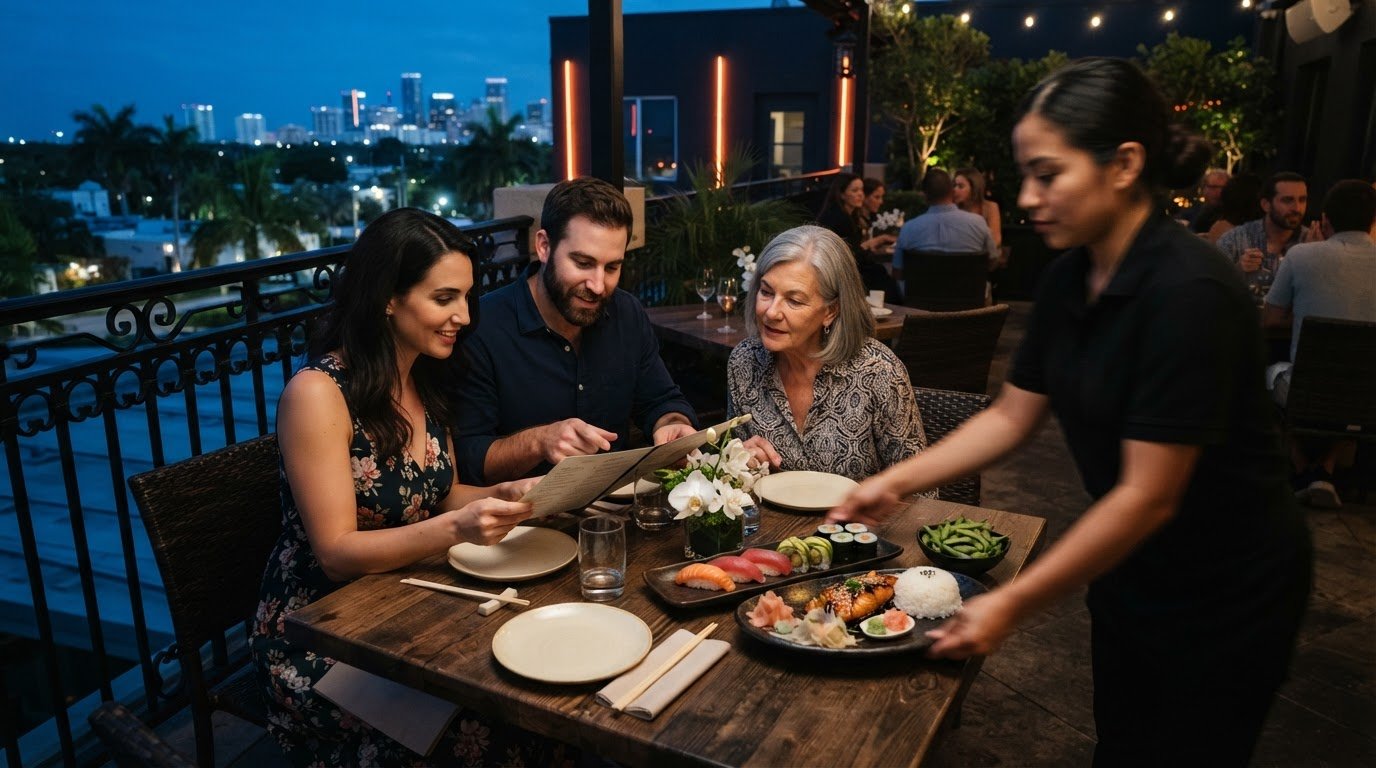
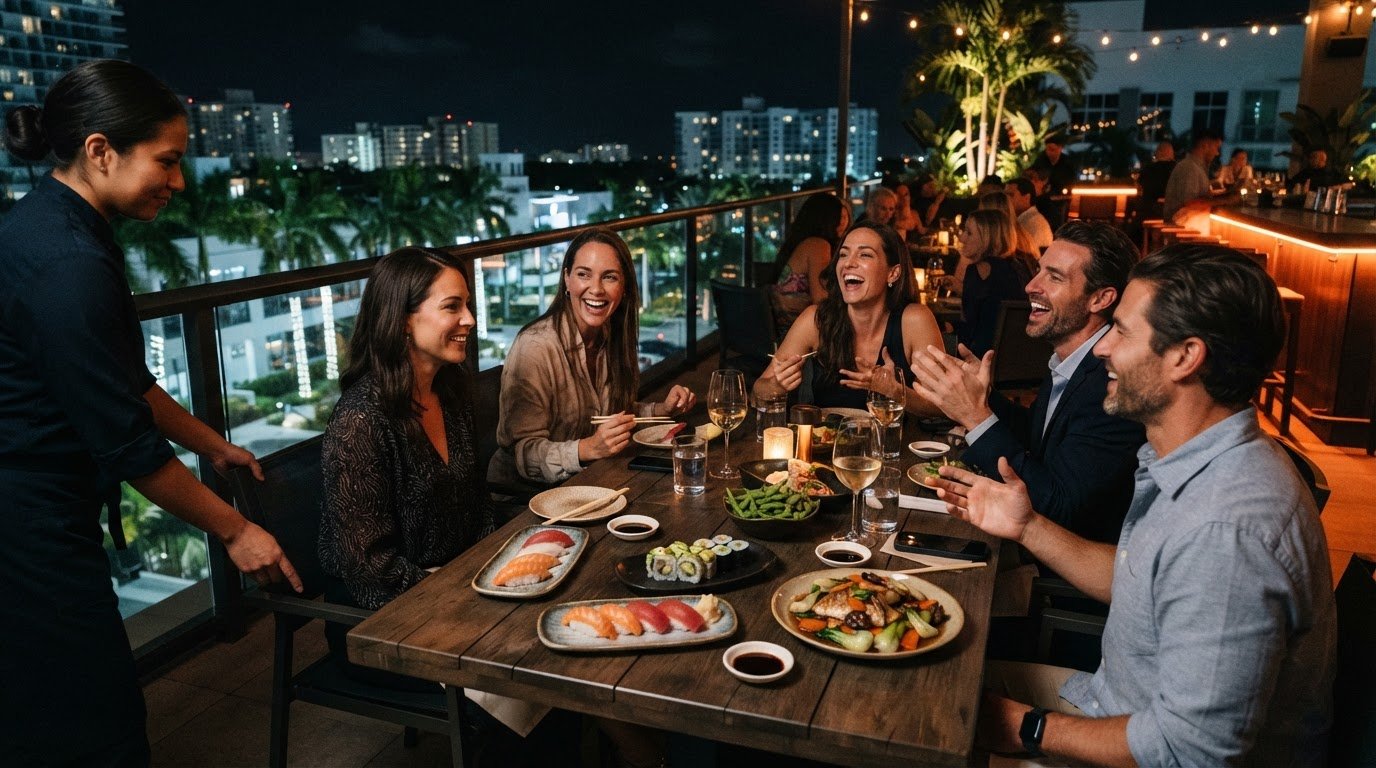
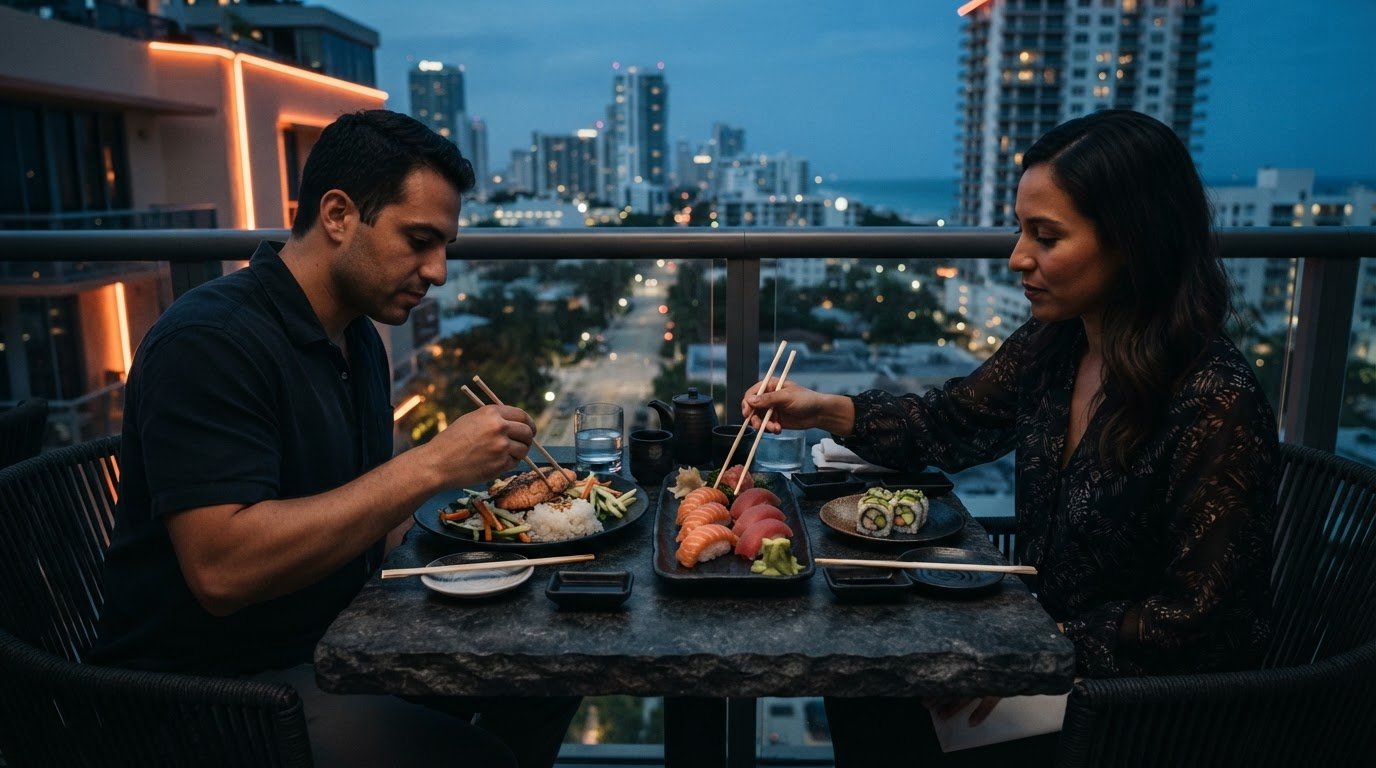
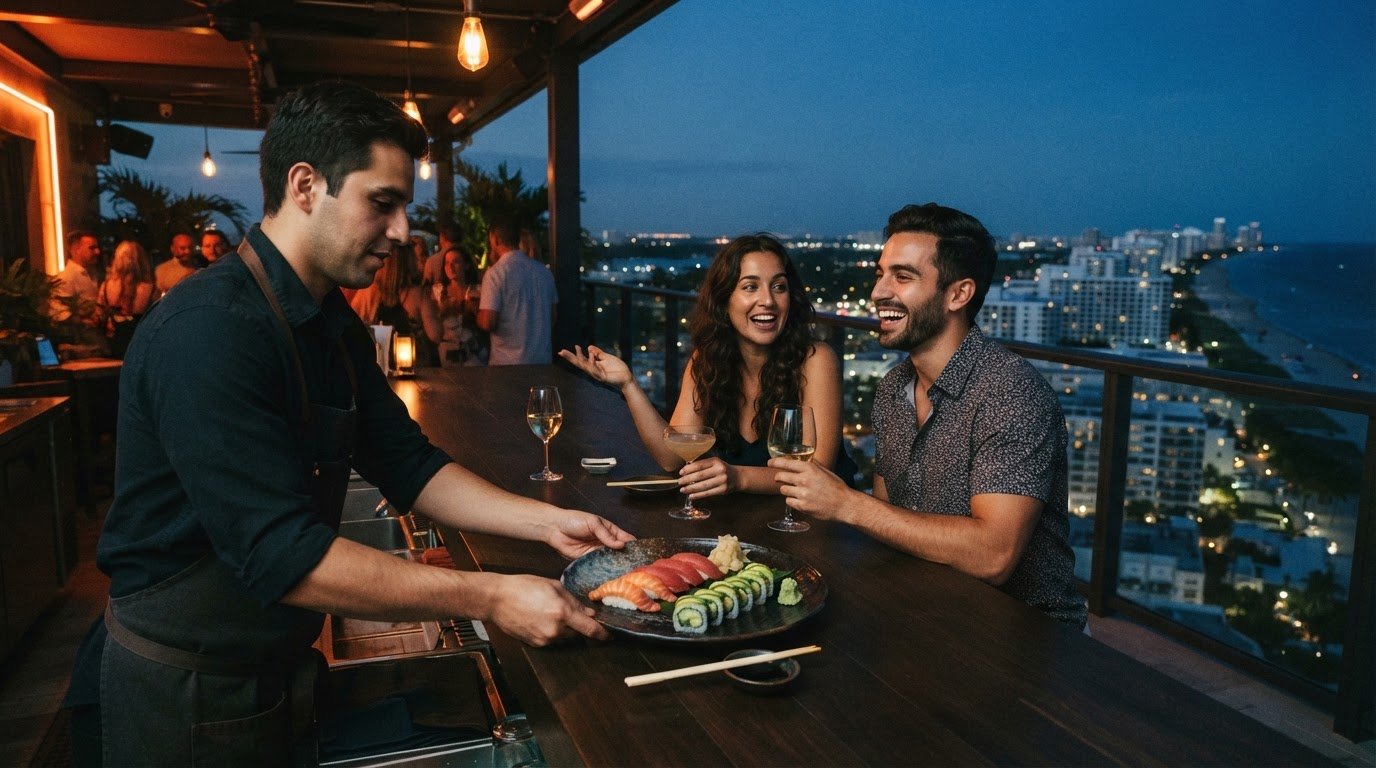
G7 Rooftop offers a kosher restaurant experience for diners seeking sushi and Japanese-fusion cuisine in an elevated setting. If you’re comparing café-style options with a more destination-focused outing, its rooftop atmosphere brings a distinct mood to a meal. Located in Hollywood, Florida, it serves the greater Miami area, making it an option for guests planning a kosher dining experience nearby.
Choose G7 Rooftop when you want kosher sushi alongside Asian-inspired dishes, with the rooftop setting shaping the occasion. It’s a natural fit for a dinner that feels more like an evening out than a quick café stop. The menu and atmosphere offer a different way to approach your search for a similar dining experience.
For details about dining at G7 Rooftop, contact G7 Rooftop.
Choose the setting for your next meal
The next step is to decide what you want the outing to feel like. A relaxed café visit and an elevated evening out offer different kinds of enjoyment, even when both center on kosher sushi. For diners considering kosher sushi similar to Yum Berry Cafe, let the atmosphere you’re after guide your choice.
G7 Rooftop brings together the experience of a rooftop restaurant in Miami and a rooftop bar, offering another setting to consider for a special meal or evening plans. It also adds a distinctive option to the range of Miami rooftop restaurants, pairing kosher dining with a rooftop atmosphere.
Picture the occasion, the company, and the kind of setting that would make the meal feel memorable. Then take the next step at your own pace. Contact G7 Rooftop to discuss your visit, and start shaping an evening that feels right for you.
Frequently Asked Questions
What sushi, poke, and Japanese-inspired dishes do similar kosher restaurants serve?
Menus vary, so compare the restaurant’s listed dishes rather than assuming poke is available alongside sushi. G7 Rooftop’s menu includes Sushi, Raw Bar, Tapas, Signature dishes, Sea, Land, Desserts, and Beverages, bringing several dining categories together. Its food is kosher under the supervision of the Orthodox Rabbinical Board (ORB). Review the menu to choose the sushi or Japanese-inspired options that suit your meal.
What do customer reviews say about kosher sushi restaurants similar to Yum Berry Cafe?
When comparing reviews, look for recurring comments about sushi, menu variety, service, and atmosphere. Specific observations are more useful than relying on a single review.