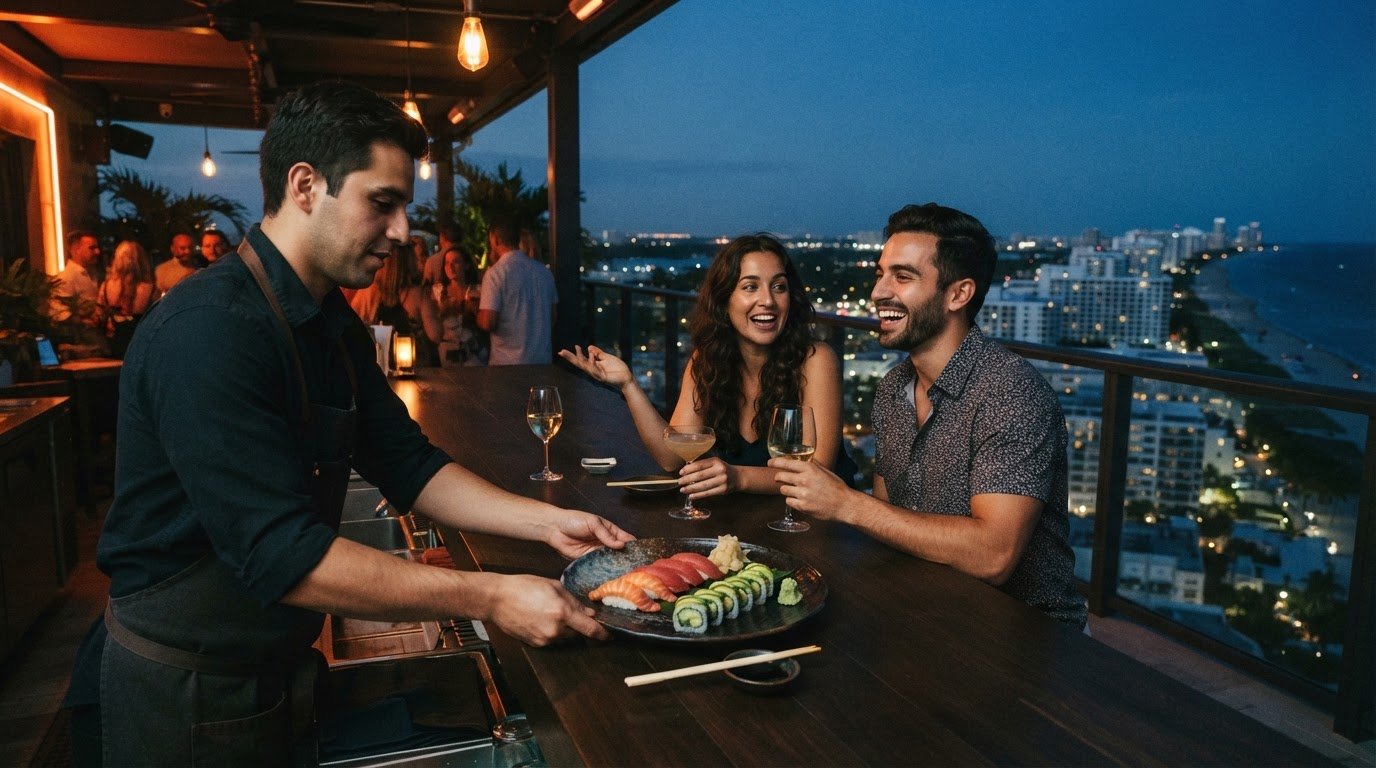
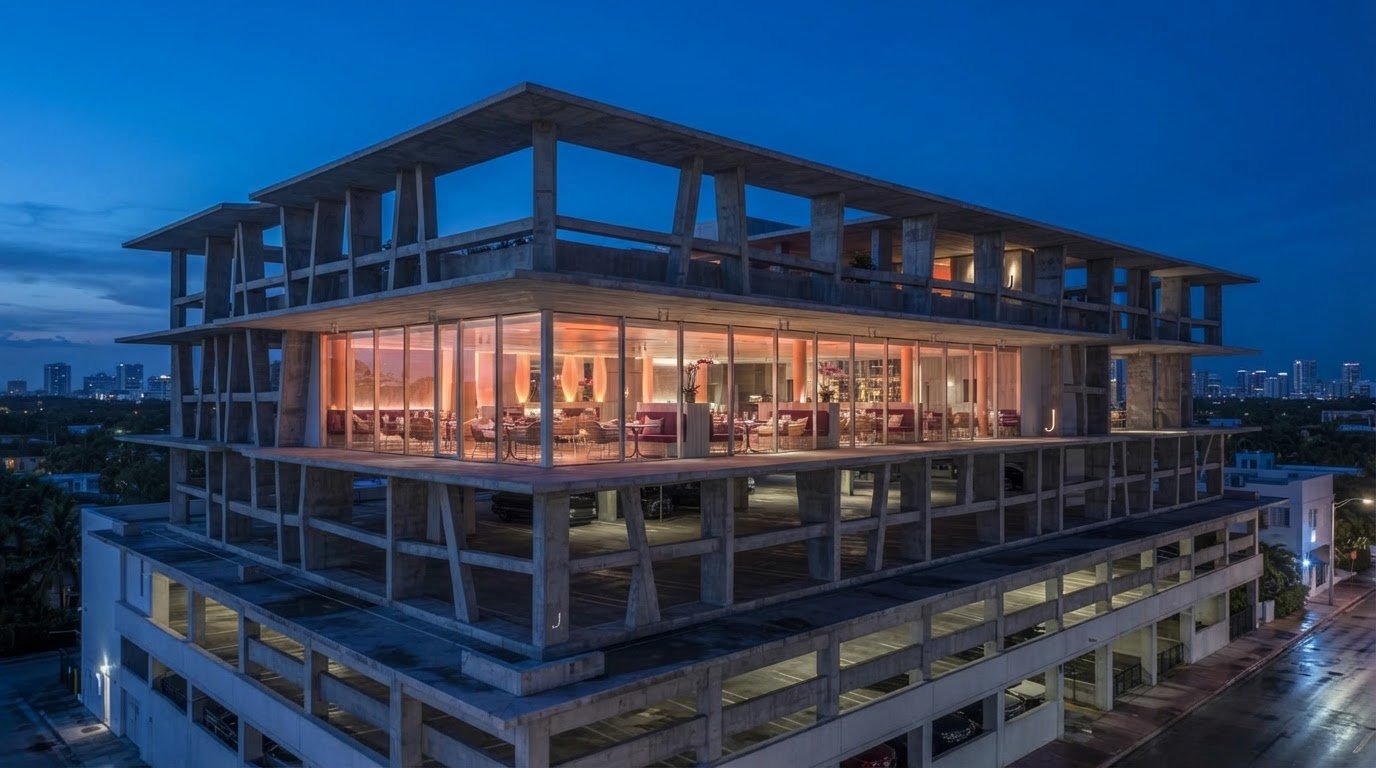
Finding a kosher alternative to Nobu Miami can still deliver Japanese-inspired dining through kosher sushi and Japanese-fusion dishes in an elevated setting. In the greater Miami area, Hollywood, Florida, is one place to find that combination. The experience is about more than the menu: atmosphere matters, too.
If you’re drawn to a polished blend of Japanese influences and lively dining, it makes sense to want an option that also meets kosher needs. The key is finding a restaurant where the cuisine and setting come together, rather than settling for a substitute that only covers one part of the evening. This guide explores what to look for in kosher Japanese-inspired dining around Miami, how the options differ, and where a rooftop setting can add another dimension to the night.
Key Takeaways
- Learn how to distinguish fully kosher dining options in Miami and what details matter when choosing a restaurant.
- Explore the qualities that make sushi and Japanese-inspired dishes appealing for a kosher dining experience.
- Compare cuisine, atmosphere, and dining style to find an option that suits the evening you have in mind.
- Understand what to consider when looking for omakase or a high-end tasting experience.
- Discover how G7 Rooftop brings kosher Japanese-fusion dining together with a rooftop restaurant and bar setting.
Fully kosher restaurants in Miami
Miami’s kosher dining scene spans distinct neighborhoods and restaurant styles, so the right choice depends on more than cuisine. Mutra in North Miami was named to Resy’s 2025 Top 100 as the only kosher restaurant on that list. That recognition offers one useful reference point, while a diner’s practical priorities may include location, menu, atmosphere, and the needs of the people at the table.
Other named examples show how varied the area’s options can be. Fuego by Mana is at 3861 NE 163rd Street in North Miami Beach. The Harbour Grill in Surfside opened in 2006. Zak the Baker’s brick-and-mortar store opened over a decade after Zak began making bread in his garage. These examples reflect different restaurant identities, rather than a single template for kosher dining.
The leading options named here are in North Miami, North Miami Beach, and Surfside, so distance from Nobu Miami varies by destination. Travel time depends on the route, starting point, and traffic; use the neighborhood and current road conditions to plan the trip.
Capacity and service shape an evening as much as the menu. Seating arrangements, table sizes, and the level of activity affect how comfortable a venue feels for a small dinner or a larger gathering. A lively setting may suit a celebration, while a quieter one may work better for conversation. Choose based on your group’s size and preferred pace, rather than assuming every kosher restaurant offers the same experience.
Kosher-style is not necessarily the same as fully kosher. The phrase can describe food inspired by kosher traditions without indicating that the restaurant meets a particular diner’s kosher requirements. For observant guests, the distinction matters: cuisine alone does not establish kosher status. In North Miami Beach, most kosher restaurants are supervised by Kosher Miami (KM) and have a fixed mashgiach. That local detail can help explain how kosher dining is organized in the area.
A practical way to narrow your choices is to decide what matters most before selecting a destination:
- For neighborhood: compare North Miami, North Miami Beach, and Surfside against the evening’s starting point.
- For dining style: distinguish a fully kosher restaurant from a kosher-style menu.
- For the group: consider seating, atmosphere, and the pace that suits the occasion.
- For cuisine: look beyond the word “kosher” to the specific dishes and dining experience you want.
These distinctions make the search more useful than relying on a label alone. Mutra, Fuego by Mana, Zak the Baker, and The Harbour Grill illustrate the range of named kosher dining destinations around Miami, each in a different neighborhood or dining category.
Sushi and Japanese-inspired dishes
Yes. Kosher Japanese restaurants in Miami can serve fish, meat, or both, depending on each restaurant’s menu. Sushi may be the focus, while Japanese-inspired dishes can add other choices. Look at the menu as a whole: a guest seeking fish, a guest preferring meat, and companions with different tastes may each prioritize different dishes.
For sushi, start by identifying the style you want. Nigiri highlights a topping over rice, while maki presents ingredients rolled with rice and seaweed. Vegetable rolls offer another direction. These examples describe sushi formats, not a promise that every restaurant serves each one. A thoughtful menu can make the meal feel varied through different textures, shapes, and combinations, even when the table chooses several dishes to share.
Japanese-inspired cuisine also reaches beyond sushi. A menu might pair sushi with Asian-inspired preparations, offering guests a broader choice than a sushi-only meal. For a mixed group, that distinction can matter: one diner may want a focused sushi experience, while another prefers a cooked dish. Read the dish descriptions for the ingredients and preparation style, then consider whether the menu suits the occasion’s pace and the group’s preferences.
Kosher status and Japanese flavor are separate considerations. A dish’s name or appearance alone doesn’t tell you how it is prepared or whether it fits your needs. For example, a roll’s rice, filling, sauce, and accompanying ingredients all contribute to the finished dish. A meat dish brings a different set of ingredients and dining expectations. Choose from the restaurant’s kosher menu rather than assuming a familiar sushi name guarantees a particular preparation.
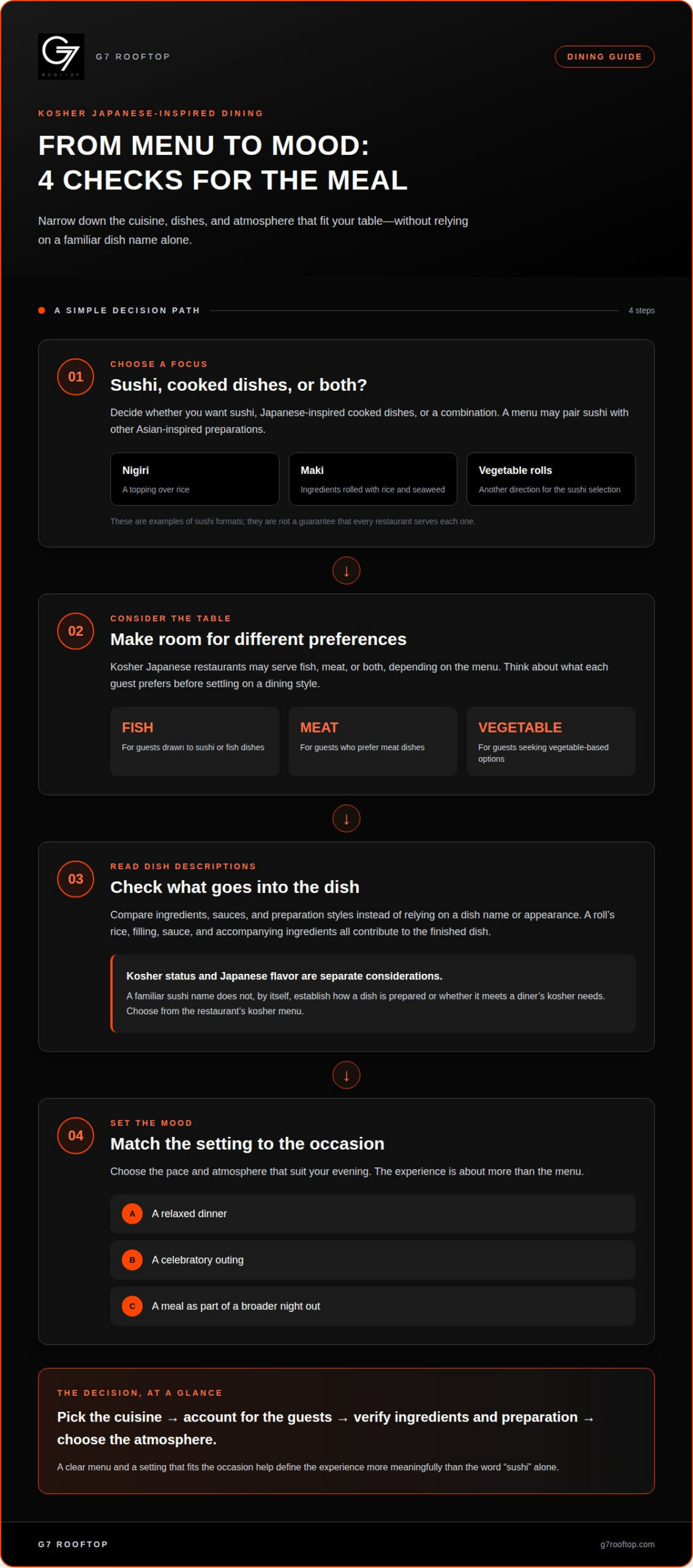
Use these steps to narrow down what you’d enjoy:
- Choose a focus: decide whether sushi, cooked Japanese-inspired dishes, or a combination sounds right.
- Consider the table: account for guests who prefer fish, meat, or vegetable-based options.
- Read dish descriptions: compare ingredients, sauces, and preparation styles instead of relying on names alone.
- Set the mood: decide whether the meal should be a relaxed dinner, a celebratory outing, or part of a broader night out.
Those choices help define the experience more clearly than the word “sushi” by itself. If you’re considering a kosher Japanese-fusion meal in an elevated setting, get in touch about dining as you plan your evening.
What kosher restaurants in Miami offer upscale Japanese or Asian fusion dining?
For an upscale Japanese or Asian fusion meal, compare three elements: kosher dining, cuisine, and setting. Nobu Miami provides a familiar reference for Japanese-inspired dining, but a close alternative should match the parts of the experience that matter most to you. One guest may prioritize sushi, another a broader menu, and another a polished atmosphere for a special evening.
Start with the cuisine rather than the restaurant’s name. “Japanese-inspired” can describe sushi alongside cooked dishes, while “Asian fusion” suggests influences beyond one culinary tradition. Those labels don’t identify specific ingredients or preparations. For example, a menu pairing sushi with other Asian-inspired dishes offers a different range from a menu centered only on sushi. Read the descriptions to understand the experience each restaurant presents.
Next, consider how the room supports the meal. An upscale dinner may call for attentive pacing, an elegant dining room, or a lively social setting. These qualities are distinct from kosher status and cuisine. Decide whether you want a quiet conversation or the energy of a night out, then look for a restaurant whose setting complements that occasion. A rooftop, for example, makes the view and surroundings part of the evening, while an indoor dining room may keep attention on the table.
Miami’s kosher restaurant scene includes destinations such as Mutra in North Miami, Fuego by Mana in North Miami Beach, and The Harbour Grill in Surfside. These names establish a range of neighborhoods, but a restaurant’s location alone doesn’t tell you whether its menu fits a Japanese-fusion preference. Treat cuisine and atmosphere as separate decision points, rather than assuming that a well-known kosher destination offers every style.
Use this simple comparison to define your ideal match:
- Kosher dining: Look for a restaurant described as kosher, not merely kosher-style.
- Cuisine: Decide whether you want sushi, Japanese-inspired dishes, or a broader Asian-fusion menu.
- Setting: Choose between a refined dining room, a rooftop atmosphere, or a more energetic social environment.
- Occasion: Match the restaurant’s mood to a date, celebration, or relaxed dinner with friends.
The closest fit depends on which Nobu qualities you want to echo. If sushi is central, prioritize the menu. If the evening’s atmosphere matters just as much, compare the setting and service style, too. This approach helps narrow the search without treating every upscale kosher restaurant in Miami as interchangeable.
Which Miami kosher restaurants are closest to Nobu Miami in cuisine, ambiance, and price?
There isn’t one clear match across cuisine, atmosphere, and price for every diner. A kosher alternative to Nobu Miami is closest when it reflects the qualities you value most, whether that’s Japanese-inspired food, a polished setting, or the overall feel of the evening. Compare each dimension separately before deciding.
For cuisine, distinguish restaurants with Japanese or Asian fusion dishes from kosher restaurants serving other styles. A restaurant’s kosher status doesn’t establish that its menu resembles Nobu’s. Compare the actual dishes and menu descriptions, paying attention to whether sushi is central or shares space with other Asian-inspired preparations. That step narrows the field without assuming that a restaurant’s name or reputation guarantees a particular menu.
For ambiance, define the setting you want before choosing a destination. A refined indoor dining room, a lively social scene, and a rooftop experience create different evenings. The names Mutra, Fuego by Mana, and The Harbour Grill identify Miami-area kosher dining options, but location alone doesn’t establish which atmosphere best suits your occasion. Match the setting to the plan, such as a relaxed dinner or a celebratory night out.
Price is best compared through the meal you intend to order, not a broad label such as “upscale.” The final bill depends on the dishes selected and the menu format. Where published prices are available, compare a similar combination of courses and drinks. Avoid treating a sushi-focused meal and a multi-course dinner as equivalent comparisons: the format and selections affect the total.
A practical side-by-side comparison can keep the decision grounded:
- Cuisine: Identify sushi, Japanese-inspired dishes, or broader Asian fusion on each menu.
- Atmosphere: Decide whether you prefer a quiet room, lively dining, or rooftop surroundings.
- Price: Compare similar dishes and meal formats rather than headline impressions.
- Location: Consider whether North Miami, North Miami Beach, or Surfside fits your plans.
Use Nobu Miami as a reference, not a checklist every kosher restaurant must reproduce. If sushi and Japanese-inspired flavors matter most, make cuisine your first filter. If the occasion calls for a striking setting, prioritize ambiance. Then compare like-for-like menu choices to understand price. This method gives you a more meaningful match than naming one restaurant as the closest on every measure.
Does Miami have a kosher sushi restaurant with omakase or high-end tasting menus?
Miami has kosher sushi and Japanese-inspired dining, but those descriptions don’t automatically mean omakase is offered. Omakase is a chef-led format in which the meal follows the chef’s selections—a philosophy of tailored craftsmanship that extends beyond dining to beverage artistry at spots like Hanashi Omakase Cocktail Bar. A tasting menu is also distinct from ordering individual sushi dishes. Treat each as its own menu feature rather than assuming one comes with the other.
For a kosher sushi dinner, begin with the restaurant’s menu and identify the format it describes. A selection of sushi rolls, for example, lets diners choose dishes individually. A tasting menu presents a sequence of courses, while omakase places the chef’s choices at the center of the meal. These distinctions help set expectations before choosing a restaurant for a special occasion.
Kosher status and service style answer different questions. The first concerns whether the dining option meets a guest’s kosher needs; the second describes how the meal is served. A restaurant serving kosher sushi might offer a regular menu, a chef-selected sequence, or another dining format. The word “sushi” alone doesn’t establish which applies. Read menu descriptions as specific statements about the meal.
Use these points to assess whether a restaurant suits a high-end tasting experience:
- Look for the format: distinguish a tasting menu or omakase from individually selected dishes.
- Consider the meal’s structure: decide whether you prefer a sequence chosen by the chef or control over each order.
- Review the cuisine: determine whether sushi is the focus or part of a broader Japanese-inspired menu.
- Match the occasion: choose a format that suits the evening, from a focused dinner to a celebratory meal.
Nobu Miami can serve as a reference for the polished Japanese-inspired evening you have in mind, but keep the comparison specific. If chef-led courses matter most, prioritize that format. If sushi is the main draw, focus on the menu’s sushi selection instead. A high-end atmosphere can complement either approach, but it doesn’t indicate that omakase is part of the meal.
For a kosher Japanese-inspired evening, make the menu format and dining mood central to your decision. Share your dining plans to explore an option suited to the occasion.
G7 Rooftop: rooftop restaurant miami
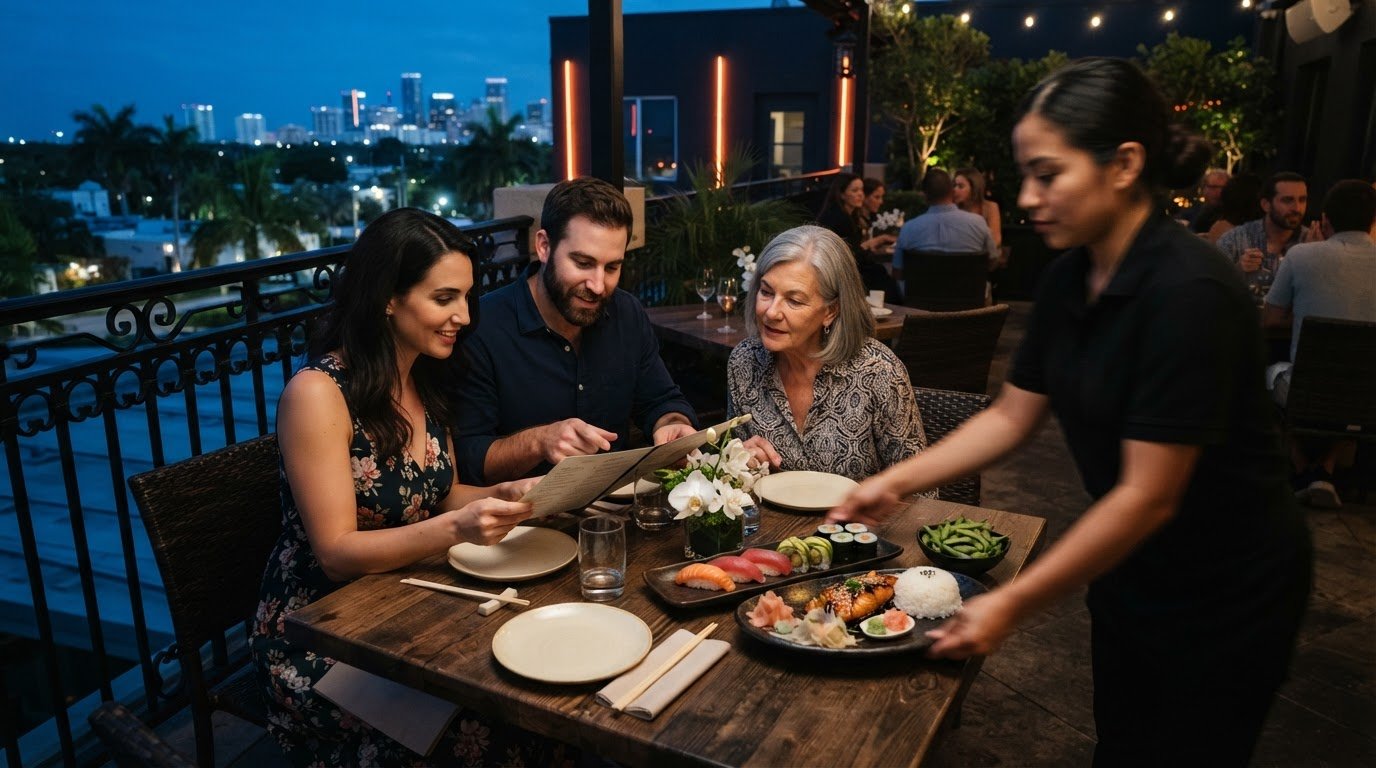
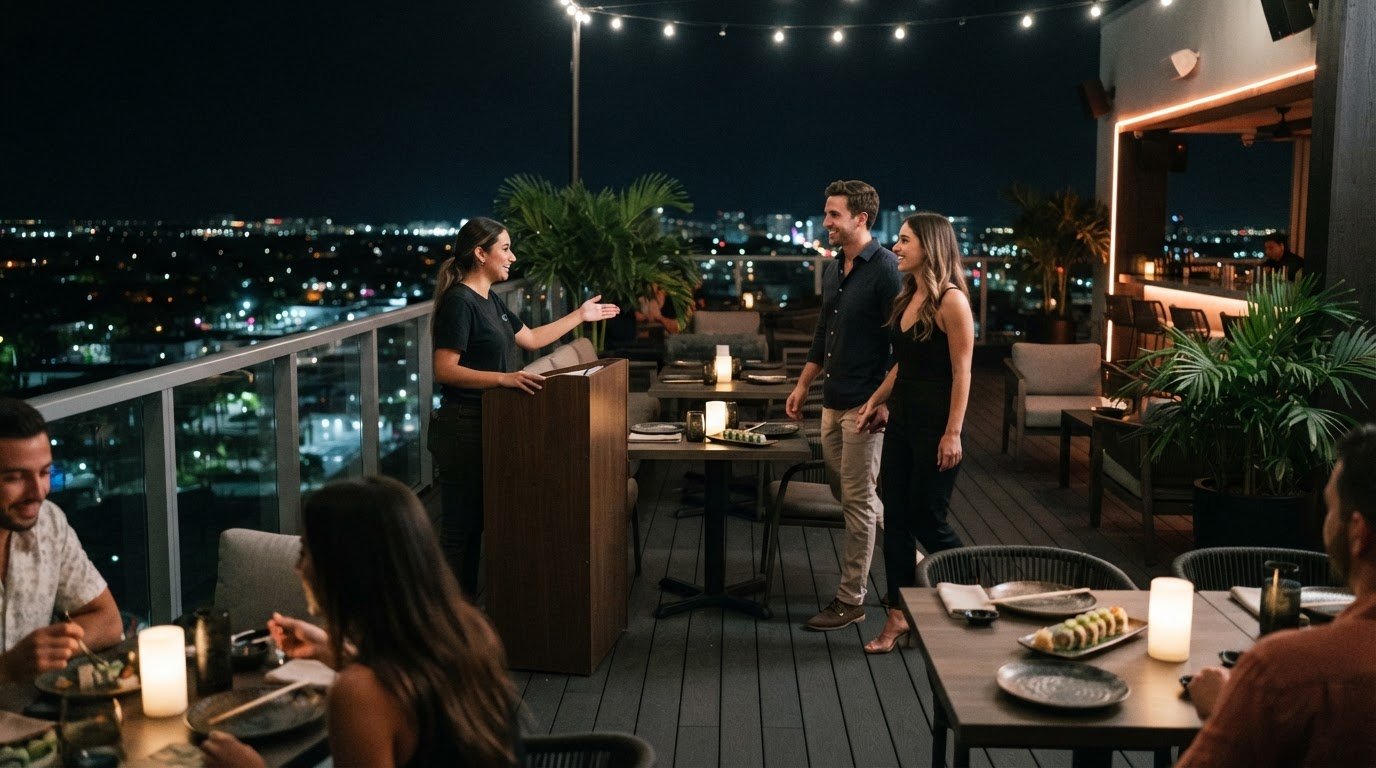
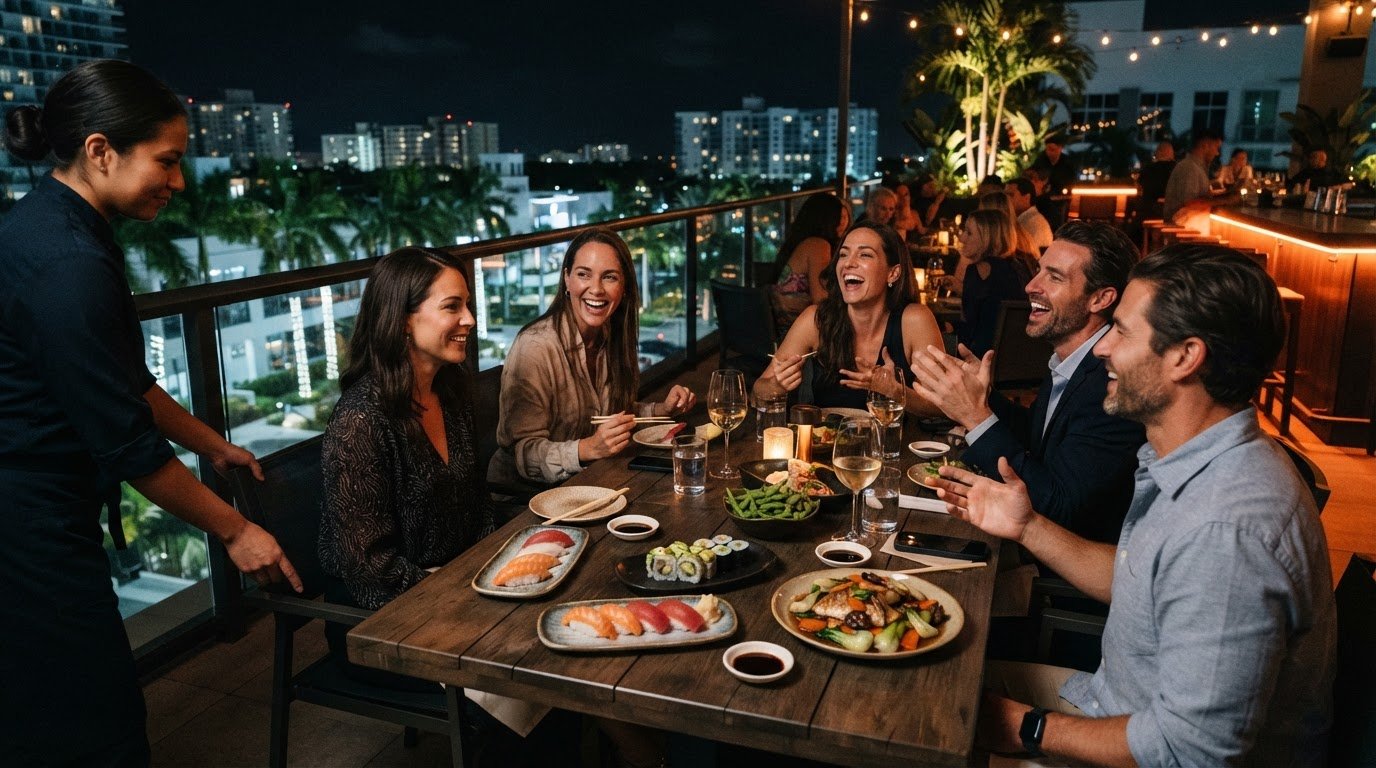
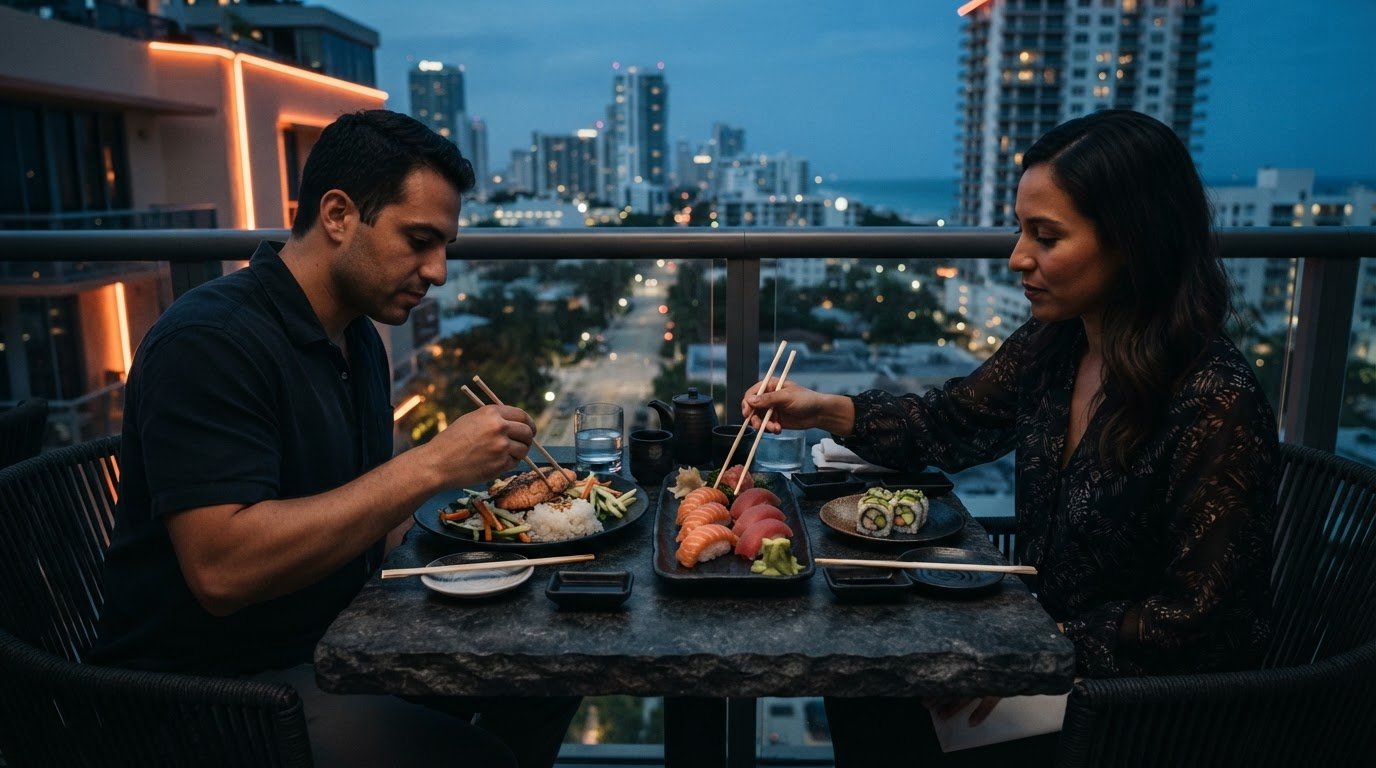
G7 Rooftop brings kosher Japanese-fusion dining into an elevated rooftop setting in Hollywood, Florida, serving the greater Miami area. Its menu features kosher sushi and Asian-inspired dishes, offering a distinctive option for diners seeking Japanese-inspired flavors alongside a refined atmosphere.
Choose G7 Rooftop when you want a kosher restaurant experience that pairs the meal with rooftop surroundings and a lively social setting. The venue also brings together dining and a rooftop bar, making it a natural fit for an evening where atmosphere matters as much as cuisine.
For a kosher Japanese-fusion dinner in the Miami area, contact G7 Rooftop to discuss your plans.
Make your next evening your own
The right dinner choice is the one that fits the mood you want to create, not simply the name you’re trying to match. For anyone seeking a kosher alternative to Nobu Miami, consider what will make the evening memorable: Japanese-inspired flavors, a striking setting, or a lively place to continue the night. Let that priority guide your plans.
G7 Rooftop brings together a rooftop restaurant experience and rooftop bar in Miami, making the surroundings part of the occasion. It offers a fresh perspective on the city’s rooftop dining scene, with kosher Japanese-fusion cuisine for guests drawn to that combination. Whether you’re planning a special dinner or simply ready for a change of scenery, choose an evening that feels distinctly yours.
Plan your visit with G7 Rooftop, and look forward to a memorable night above the city.
Frequently Asked Questions
What are the best kosher restaurants near Nobu Miami Beach or South Beach?
For kosher dining around the broader Miami area, consider restaurants in North Miami Beach, Surfside, North Miami, and Hollywood. Fuego by Mana is in North Miami Beach, while The Harbour Grill is in Surfside. Mutra is in North Miami, and G7 Rooftop is in Hollywood. These destinations aren’t all in South Beach, so choose based on the neighborhood and dining style that best fit your plans.
Which upscale kosher restaurants in Miami are open on Friday night or Saturday?
G7 Rooftop is closed for dinner on Friday and opens Saturday evening. Its Saturday dinner hours are 9:15 pm to 12:30 am, while bar hours are 9:15 pm to 1:00 am. The kosher Asian cuisine is supervised by the Orthodox Rabbinical Board (ORB). For a Saturday outing, plan around the later opening and distinguish dinner hours from bar hours.
How far are the leading kosher alternatives from Nobu Miami, and what are the travel times?
The leading options are in North Miami, North Miami Beach, and Surfside; travel time depends on your starting point, route, and traffic.