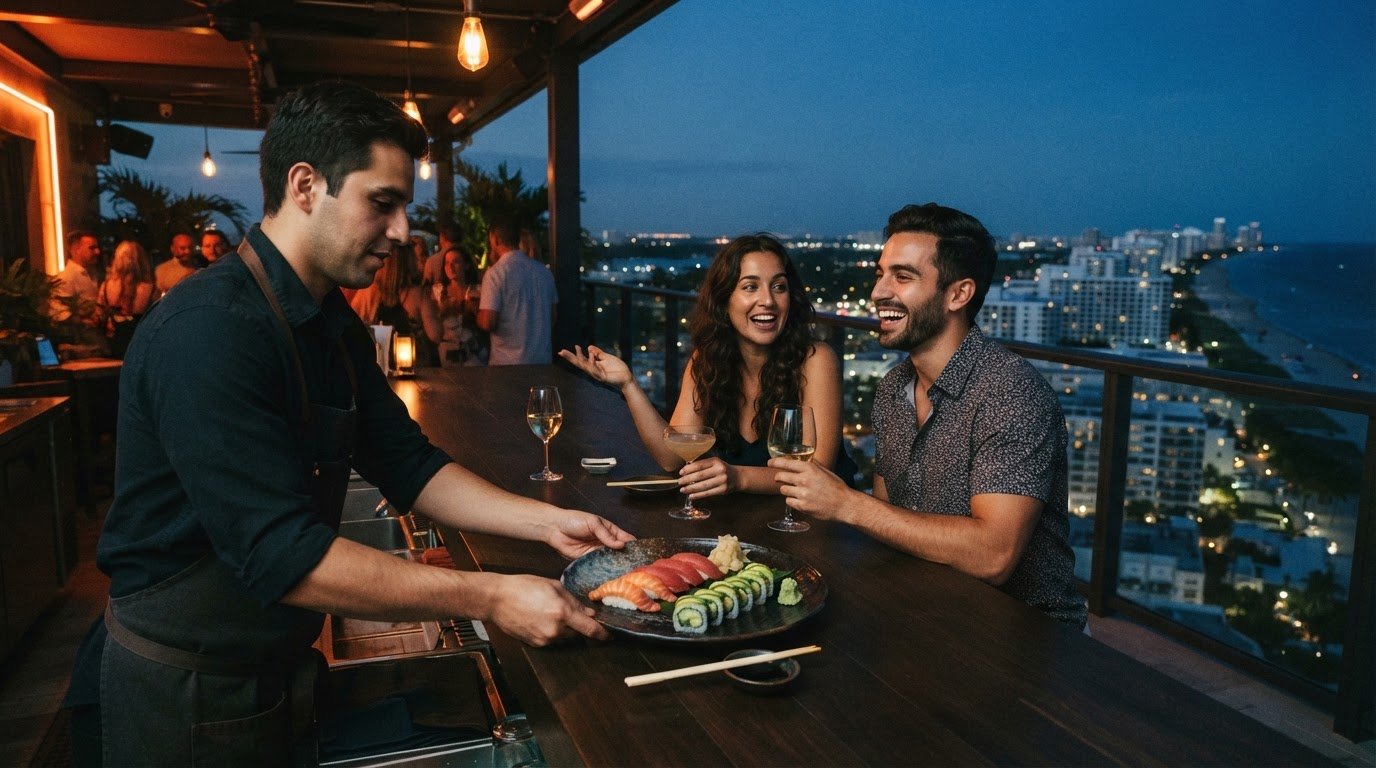
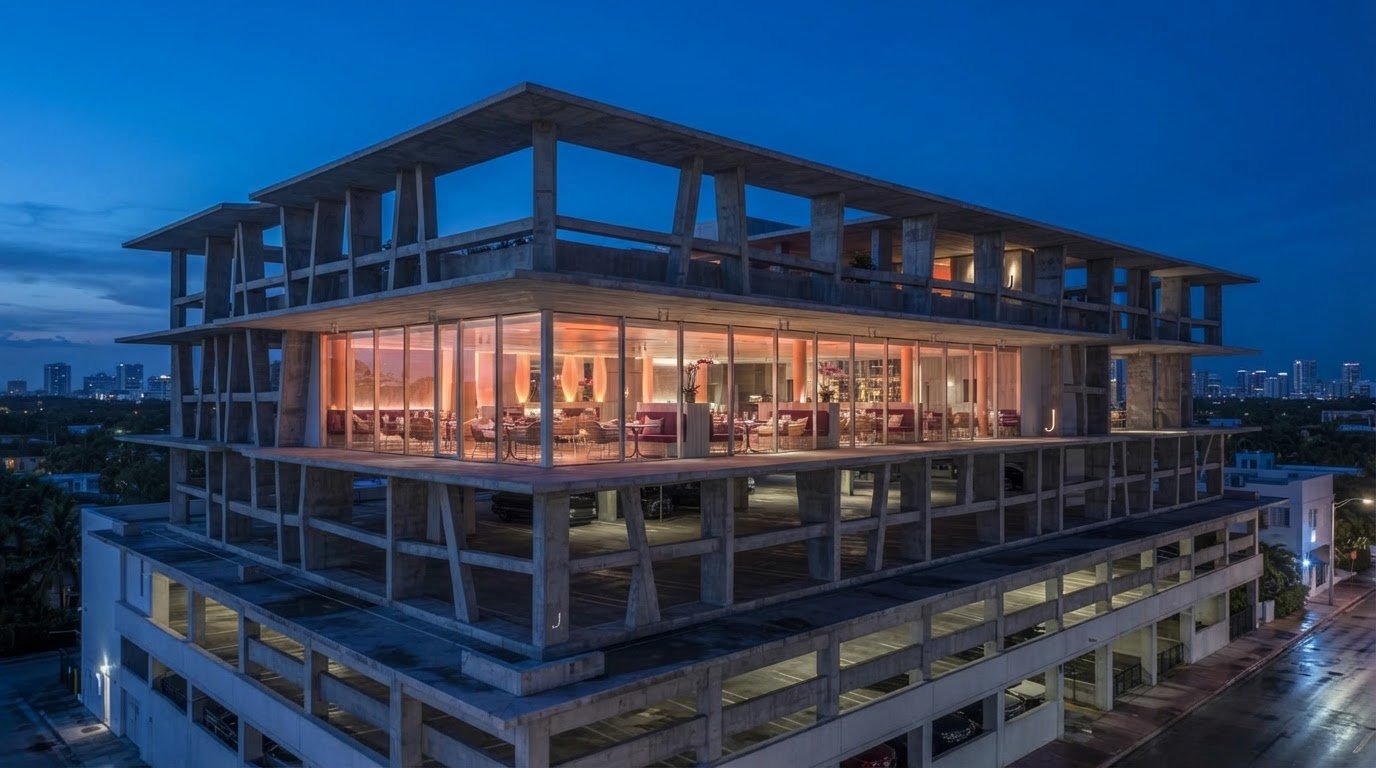
The better choice depends on the evening you want: choosing what’s better, Asiatiko or G7 Rooftop, comes down to the atmosphere and menu that suit your plans. G7 is the fit for diners seeking kosher Japanese-fusion cuisine and sushi; the right comparison also weighs the views and raw-bar options that matter to you.
A rooftop can set the mood before the first dish arrives, but a striking setting alone doesn’t decide where dinner should be. The balance of dining and nightlife, the kind of view you’re hoping for, and the menu’s appeal all shape the experience.
This comparison will help you consider those details side by side, including atmosphere, views, sushi and raw-bar choices. You’ll come away with a clearer sense of which rooftop matches a relaxed meal, a lively night out or a special occasion, and what makes G7’s kosher Japanese-fusion offering distinctive.
Key Takeaways
- Choose by the mood you want: weigh the rooftop setting and views alongside the energy you’re seeking for the evening.
- Compare the menus for the experience that matters most, especially sushi, raw-bar choices and G7 Rooftop’s kosher Japanese-fusion cuisine.
- Plan around the schedule: G7 Rooftop lists bar hours from 11:00 am to 01:00 am Monday through Sunday, with dinner hours varying by day.
- Review the details that can shape your total visit, including any entrance fees, minimum spends or service charges.
- Match the venue to your occasion, whether you’re planning a romantic dinner, a group outing or a livelier night out.
Rooftop atmosphere and views
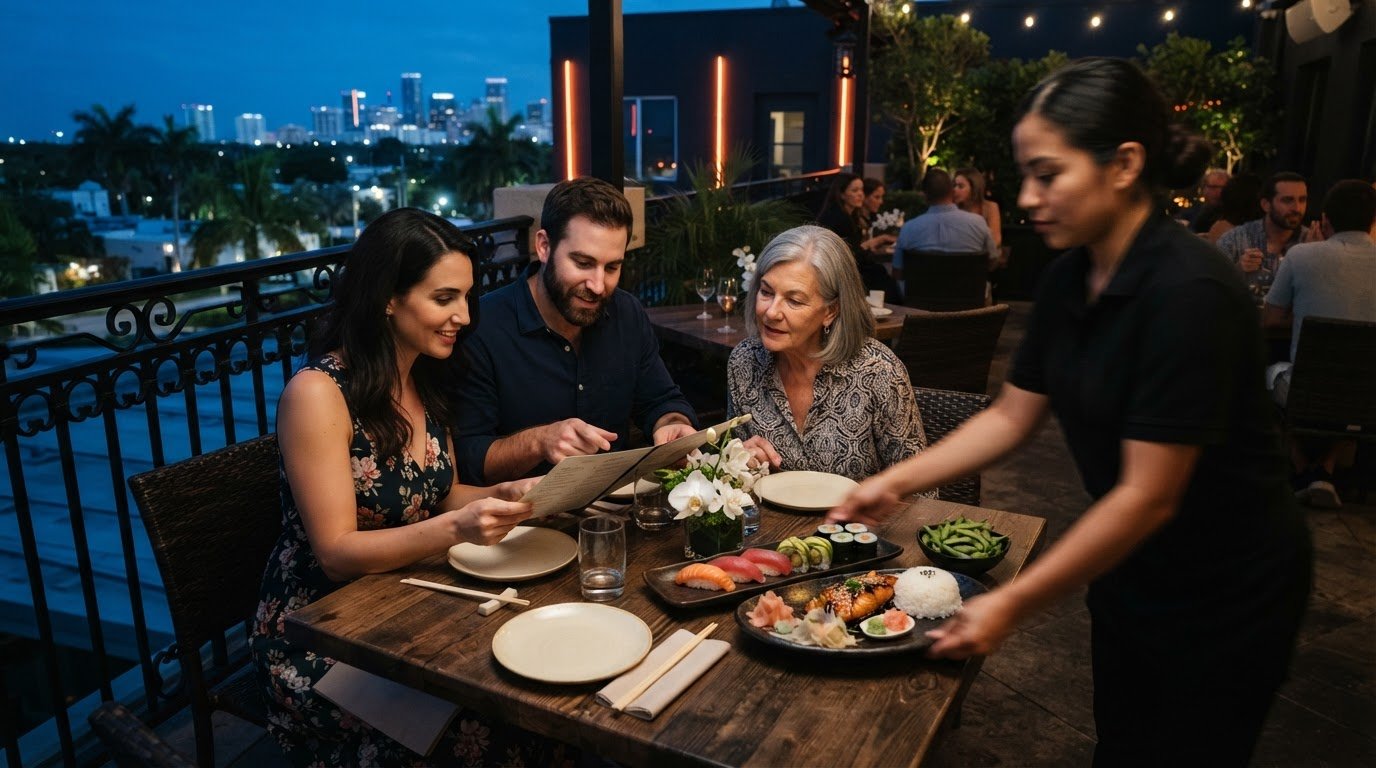
A rooftop’s appeal comes from more than height. Compare the setting, the view, and how each supports your plans. For a dinner focused on conversation, consider whether the seating and sound create a comfortable pace. For a celebratory evening, decide whether you prefer a more animated atmosphere. These preferences matter as much as a dramatic skyline. To decide what’s better between Asiatiko and G7 Rooftop, start with the mood you want.
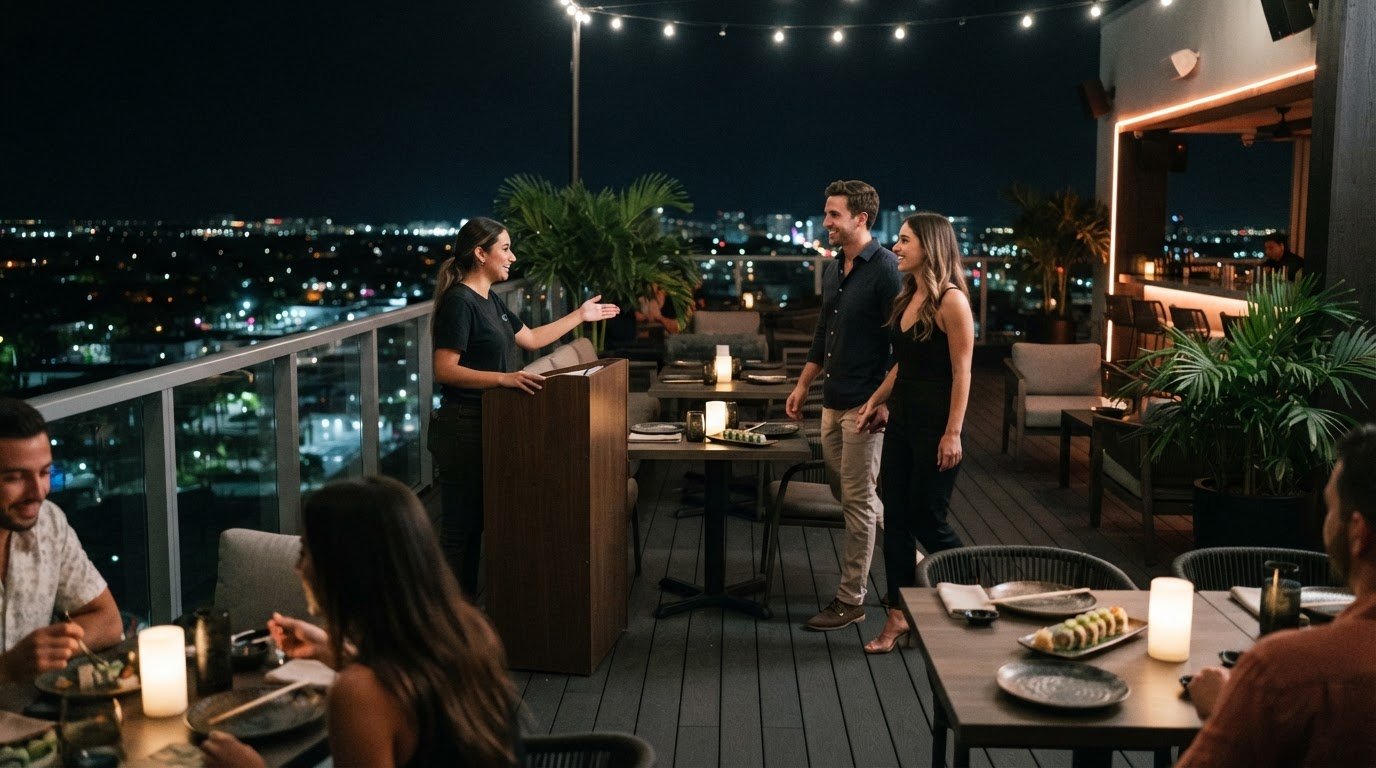
Hollywood, Florida, offers a useful point of comparison: G7 Rooftop is described as having panoramic views. That tells you elevation plays a role, but it doesn’t identify the landmarks visible from each seat. Consider the outlook you hope to enjoy, such as an open city panorama or the surrounding streets. A wide view can make arrival memorable; a more intimate vantage can keep attention on dinner.
Use these practical steps to compare Asiatiko and G7 Rooftop without letting one photograph decide:
- Picture the occasion. For an anniversary dinner, prioritize a setting that encourages conversation. For a lively gathering, consider whether the overall atmosphere feels social and energetic.
- Define the view. A panoramic outlook, striking architecture, and city lights create different impressions. Choose the scene you’d most enjoy sharing throughout dinner.
- Consider timing. Daylight and evening create different rooftop moods. Match your planned arrival with the kind of atmosphere you want to experience.
- Look beyond the label. “Rooftop” describes a setting, not a guaranteed view, energy level, or degree of privacy. Compare those qualities individually.
Compare Asiatiko’s atmosphere, dining-area views, and menu with what you want from the outing. Don’t assume two rooftop venues offer the same panoramas or experience. The most useful comparison connects each setting to your plans, whether you’re meeting for a romantic dinner, a relaxed meal, or a lively night out.
So, what’s better between Asiatiko and G7 Rooftop? The better rooftop is the one whose setting suits your preferred pace and perspective. If panoramic views are central to your plans, G7 Rooftop’s Hollywood setting has that appeal. If atmosphere matters most, weigh how each venue’s energy complements your company and occasion. Let the view set the scene, then choose the place that makes the evening feel right.
What type of cuisine and menu does G7 Rooftop offer?
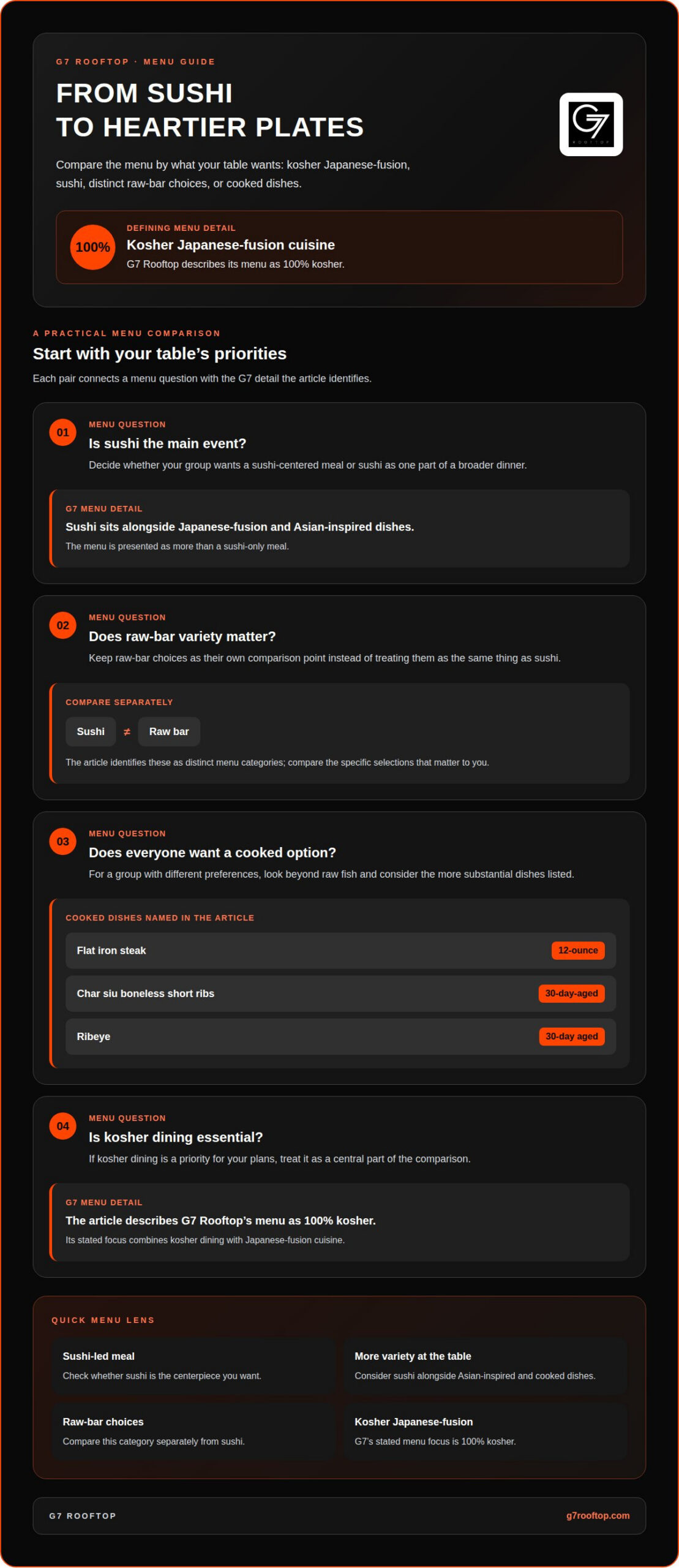
The menu centers on Japanese-fusion cuisine, sushi, and Asian-inspired dishes. Its 100% kosher menu is a defining distinction for diners comparing rooftop restaurants. If kosher dining is essential to your plans, that can weigh more heavily than atmosphere alone. For a broader menu comparison, consider whether you want sushi as the focus or a mix of sushi and cooked dishes. The question of what is better, Asiatiko or G7 Rooftop, depends partly on which menu best fits your table.
Sushi offers a familiar starting point, while Japanese-fusion cooking brings varied influences to the meal. That distinction matters if you want more than a sushi-centered dinner. One table might make sushi the main event; another might prefer it alongside Asian-inspired dishes. This combination gives diners different ways to shape the meal around their tastes.
Cooked dishes also provide substantial alternatives to sushi. Listed examples include a 12-ounce flat iron steak, 30-day-aged char siu boneless short ribs, and 30-day aged ribeye. These choices show the menu extends beyond raw fish, making it relevant for guests who want a heartier plate. They may also help a group with different preferences choose a shared dining destination.
For a useful comparison with Asiatiko, separate the menu questions instead of relying on the rooftop label:
- Sushi: Decide whether sushi is the centerpiece or one choice among several.
- Raw bar: Compare raw-bar selections separately. Sushi and raw-bar offerings are distinct menu categories.
- Cooked dishes: Consider the flat iron steak and aged short ribs if your party wants substantial alternatives.
- Kosher dining: The 100% kosher menu matters for guests specifically seeking that experience.
To determine what is better, Asiatiko or G7 Rooftop, compare the dishes you actually want, not assumptions about rooftop menus. If raw-bar variety matters most, assess that category separately from sushi. If kosher Japanese-fusion dining is a priority, the menu’s stated focus gives you a clear point of comparison. For mixed groups, consider whether the listed cooked dishes and sushi suit everyone’s preferences.
Guests weighing menu choices can use the contact page as a next step in planning. Think about each diner’s preferences, then choose the rooftop experience that best fits the table, whether you’re planning a sushi-led meal, varied Japanese-fusion dishes, or more substantial cooked selections.
What are the opening hours and reservation requirements for each venue?
Timing can shape your rooftop plans as much as the menu. The Hollywood venue lists bar hours from 11:00 am to 01:00 am Monday through Sunday. Its dinner hours are 6:00 pm to midnight Monday through Thursday, and 08:30 pm to midnight on Saturday. Those distinct schedules matter: bar hours and dinner hours describe different parts of an evening.
For example, a Thursday dinner plan can use the listed 6:00 pm start. A Saturday dinner plan begins later, at 08:30 pm. If you’re arranging a pre-dinner drink, the bar’s daily schedule offers a separate planning reference. Build your evening around the relevant service, rather than assuming dinner begins when the bar opens.
Reservation requirements should be compared separately from opening hours. A published schedule tells you when a service operates; it doesn’t, by itself, explain whether a reservation is required. For Asiatiko and the Hollywood venue, treat booking as a practical planning decision shaped by your party, preferred time, and occasion. Don’t infer a reservation rule from a venue’s hours alone.
Use this simple sequence to compare schedules and make a workable plan:
- Choose the day. Start with the exact weekday or Saturday you have in mind.
- Match the service. Separate dinner from bar hours, then use the schedule that fits your plan.
- Set your arrival time. For example, a Saturday dinner plan should account for the listed 08:30 pm start.
- Plan the reservation. Consider your party and desired seating time when arranging the outing; don’t treat posted hours as a reservation policy.
Apply the same comparison to Asiatiko. Identify the day and service you want, then align your arrival and reservation plans with its schedule. This keeps the comparison practical without assuming both rooftops have the same hours or booking process.
For a group, agreeing on the day and intended dining time can simplify the decision. A weekday dinner at the Hollywood venue has a different listed start from Saturday dinner, so the occasion may determine which schedule works. For a more flexible evening, distinguish bar availability from the dinner window before setting expectations with your party.
The practical takeaway is straightforward: use the listed bar and dinner hours as separate planning details, and compare Asiatiko using the same day-and-service approach. That helps you choose a venue based on when you want to go, while keeping reservation arrangements distinct from operating hours.
A reviewer reported that G7 Rooftop required valet parking and had no guest parking. That detail adds a separate arrival consideration to any comparison of hours and reservations. Parking arrangements can affect how a party plans its arrival, but they do not establish a booking policy or change a venue’s service schedule. If G7 Rooftop is under consideration, account for the reviewer’s report when planning how to arrive, and do not assume guest parking is available. Confirm current arrangements before setting expectations, since a reviewer’s account is not a guarantee.
Do either venue charge entrance fees, minimum spends, or service charges?
When comparing rooftop visits, distinguish an entrance fee, a spending minimum, and a charge added to the bill. They affect a visit differently: an entrance fee applies to access, a minimum spend sets a required purchase level, and a service charge or tip relates to the bill. Don’t treat one category as proof of another.
For the Hollywood rooftop, a reviewer reported a mandatory 20% tip. That report describes a tip, not an entrance fee or minimum spend. Keep the distinction clear when estimating the full experience: an added percentage can change the final bill, while an entry charge or minimum spend would affect planning in another way.
For Asiatiko, use the same categories when comparing the venues. A fair comparison depends on the specific charge type, how it applies, and whether it affects each guest or the table. Avoid assuming that one rooftop’s reported tip means the other has the same policy. The available charge detail should be read as venue-specific, not as a general rule for Miami rooftops.
Use this quick framework to assess the cost structure:
- Entrance fee: Ask whether access itself carries a charge, separate from food and drinks.
- Minimum spend: Identify whether a required purchase applies to a table, seating area, or occasion.
- Tip or service charge: Check how the bill handles gratuity, and distinguish a reported tip from other charges.
- Final total: Consider how each applicable item combines with what your party orders.
For example, a dinner party comparing Asiatiko with the Hollywood rooftop should not count the reported 20% tip as an entrance cost. Instead, place it in the bill-related category, then compare any relevant access or spending requirements separately. That approach prevents a misleading like-for-like comparison.
It also helps to distinguish a reported experience from a universal policy. The 20% figure comes from a reviewer’s account, so it should be understood as that reported charge, not generalized to every visit or applied to Asiatiko. The useful takeaway is to compare the type and application of each charge, rather than focusing on a single number.
For a clear decision, write down the charge categories for each venue before choosing. Keep the Hollywood rooftop’s reported 20% tip in its own line, and assess entrance, minimum spend, and service charges independently. This gives your group a more accurate basis for comparing the overall dining commitment without confusing separate costs.
Which venue is better for a romantic dinner, a group, or nightlife
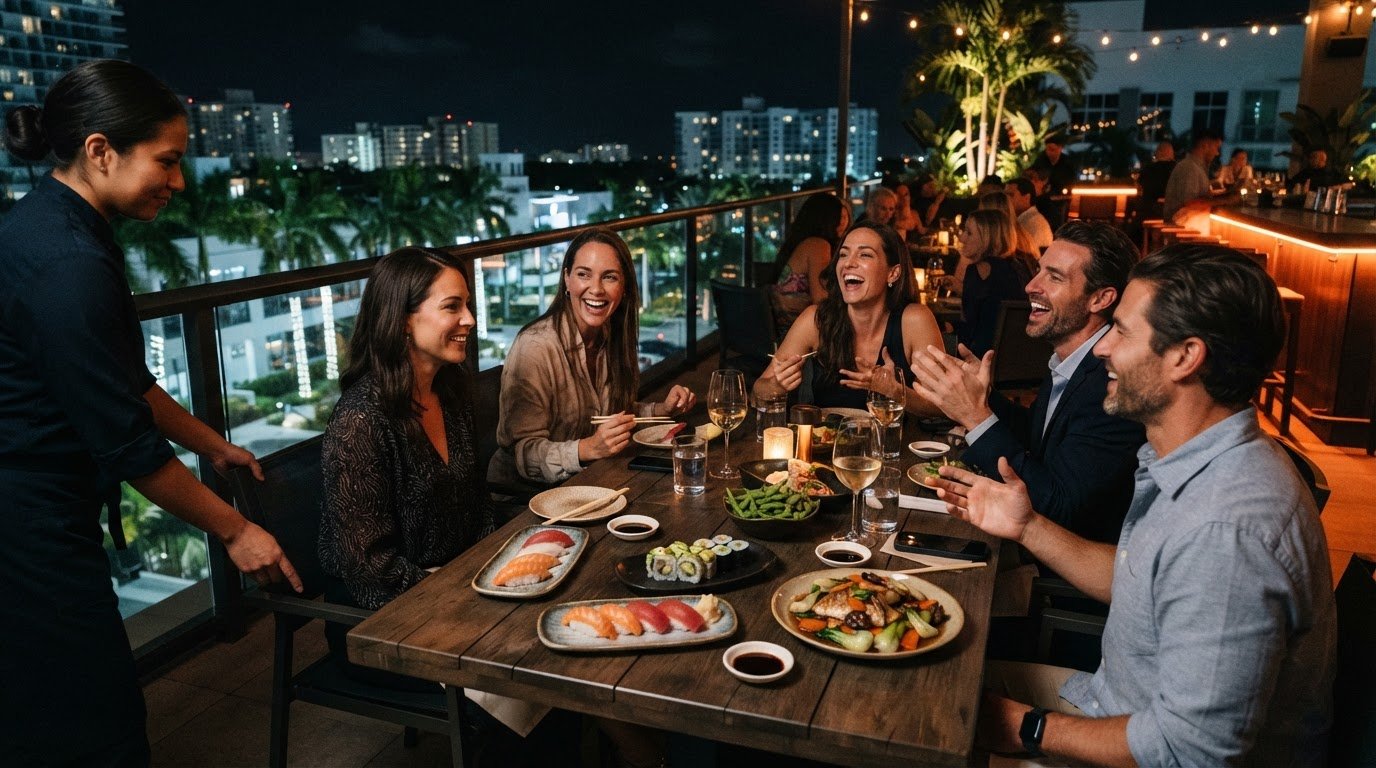
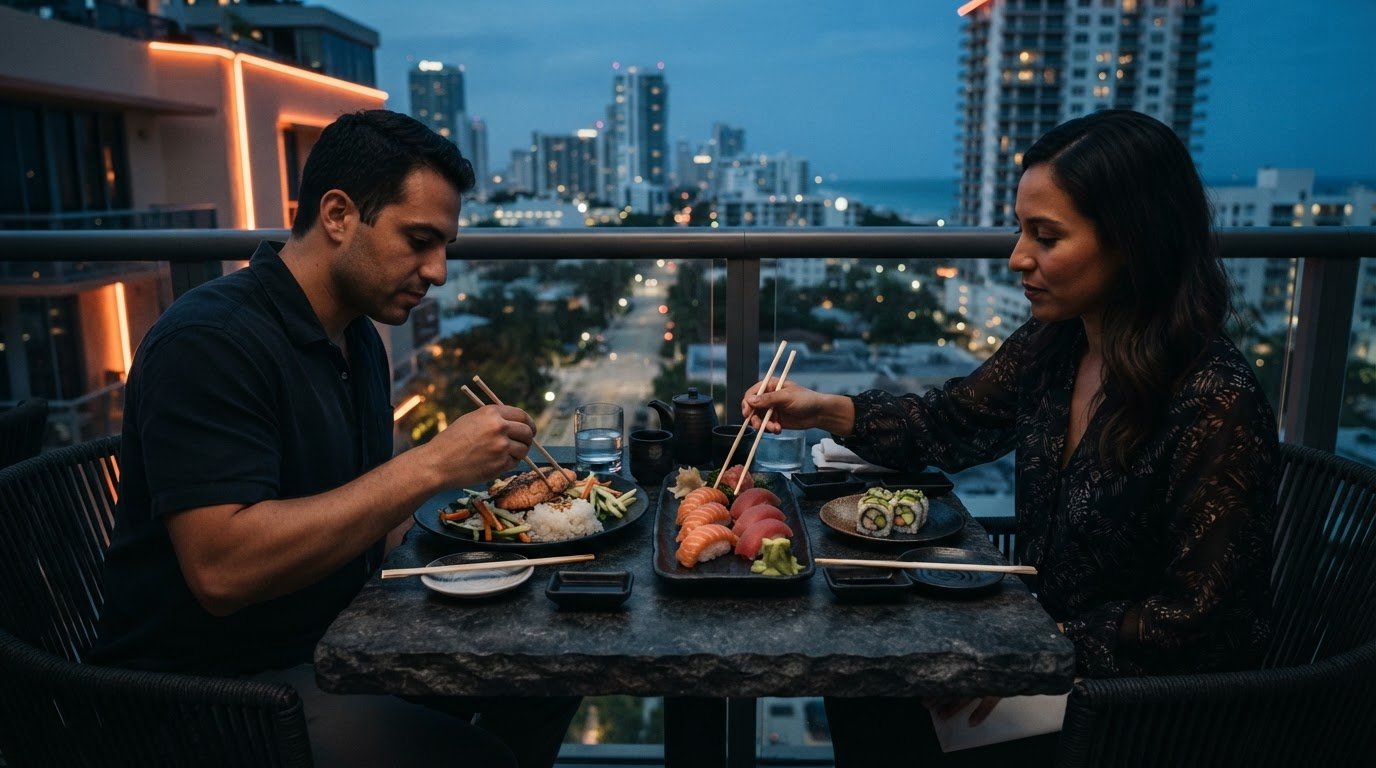
The better fit depends on the occasion, not simply the rooftop setting. For a romantic dinner, prioritize a comfortable table, a view you’ll enjoy sharing, and an atmosphere suited to conversation. For a group, menu variety and coordinating the evening may matter more. For nightlife, consider whether you want dinner to lead into a lively bar atmosphere.
For Asiatiko, weigh those same details against your plans rather than assuming its atmosphere matches another rooftop. A couple might value an intimate table and an unhurried meal. Friends celebrating together may prefer a varied menu and a social setting. A nightlife-focused outing may call for a venue where dining and drinks shape one evening.
The Hollywood rooftop’s described combination of elevated dining and vibrant nightlife makes it a natural option for guests seeking both. Its menu focus also matters: kosher Japanese-fusion cuisine and sushi can suit diners who want those choices as part of a special evening. For a romantic dinner, think about whether shared sushi and an expansive rooftop setting fit the mood you want. For a group, consider whether the menu offers appealing choices across the table.
Use these occasion-based questions to narrow your choice:
- Romantic dinner: Would you rather focus on conversation, a memorable view, or sharing sushi and other dishes?
- Group outing: Do your guests share dining preferences, or would varied menu choices make the evening easier?
- Nightlife: Is the priority a lively bar atmosphere, dinner first, or a blend of both?
- Family gathering: Does the venue’s age guidance fit everyone attending?
For family plans at the Hollywood rooftop, its page describes the venue as mostly 18+ and advises calling ahead about family arrangements. That guidance is particularly relevant when a group includes younger guests. It can shape the decision more than décor or menu preferences, so consider the ages in your party as part of planning.
In practical terms, choose Asiatiko if its atmosphere, menu, and timing align more closely with your occasion. Choose the Hollywood rooftop if kosher Japanese-fusion dining, sushi, and a nightlife-forward setting fit your group’s priorities. Neither choice is automatically better for every date, celebration, or evening out. The right comparison starts with what your guests want from the experience.
If a rooftop dinner that can transition into a livelier night suits your plans, plan your rooftop evening.
Parking deserves a place in the comparison, especially when the evening involves a group or a planned dinner followed by nightlife. A G7 Rooftop reviewer reported being told that 50-100 cars are booted nightly in the surrounding complex. That is a reviewer’s account of what they were told, not a guarantee about what every guest will encounter, but it is relevant when deciding how to arrive. Consider checking current parking arrangements before setting out, and make sure everyone in the party knows the plan. A smooth arrival can matter to the mood of a romantic evening as much as the view, and can make coordinating a group outing easier.
G7 Rooftop: rooftop restaurant miami
G7 Rooftop is a natural choice when your plans call for rooftop dining with kosher Japanese-fusion cuisine and sushi. Its elevated setting pairs a meal with panoramic views, while the rooftop bar suits guests looking to carry the evening into a livelier atmosphere. For diners comparing Miami rooftops, the defining difference is a combination of kosher dining, sushi, and a social rooftop experience.
Choose it when those priorities match your occasion, whether you’re planning dinner or seeking a rooftop bar in the greater Miami area. For more about the dining experience, explore the rooftop restaurant.
Contact G7 Rooftop to plan your visit.
Choose the evening you want to remember
Choosing what’s better, Asiatiko or G7 Rooftop, comes down to the experience you want to create. Let your plans lead: picture the people joining you, the mood you want at the table, and the kind of evening you hope to carry home. A clear priority makes the choice feel less like comparing venues and more like shaping a night that fits.
If G7 Rooftop feels right for your occasion, take the next step and plan directly with the team. Share what kind of gathering you have in mind and what would make the evening meaningful. That gives your plans a thoughtful starting point.
Contact G7 Rooftop to plan your visit, and look forward to an evening made for your company and occasion.
Frequently Asked Questions
Where are Asiatiko and G7 Rooftop located?
G7 Rooftop is at 5510 S State Rd 7 Rooftop, Hollywood, Florida 33314, atop the Dolce by Wyndham Hotel. This places it in Hollywood, within the greater Miami area. Asiatiko is the other venue in this comparison, but its location isn’t established in the details available here. For travel planning, distinguish G7’s Hollywood address from Miami proper when mapping your evening.