For booking a kosher corporate holiday party in Miami, put the kosher supervision provider and certification level in writing before the event. Then align the menu and guest dietary needs with the event terms, venue arrangements, décor, setup, and service plan. Clear coordination makes the celebration feel polished while keeping essential details in view.
A memorable company gathering should feel effortless for guests, even when planning involves many moving parts. Kosher requirements deserve particular care: they shape the food experience and need to be considered alongside the venue and schedule.
This guide explains how supervision, dietary needs, payment and cancellation terms, venue coordination, décor, setup, and service staff fit together when planning a Miami holiday party. You’ll see what to settle early, what information helps a professional shape the event, and how an elevated rooftop setting can bring a celebratory evening together.
Key Takeaways
- Settle the kosher supervision provider and certification level in writing so the food service aligns with guests’ expectations.
- Plan dietary accommodations, including dairy-free and parve options, as part of the menu conversation.
- Review payment, cancellation, and rescheduling terms early, before event details are finalized.
- Coordinate the venue, schedule, décor, setup, and service staff around the experience you want guests to have.
- Explore G7 Rooftop as a kosher restaurant and rooftop setting for a celebratory Miami gathering.
Kosher supervision and event-specific coverage
Start with the supervision arrangement, not the room styling. Ask the event organizer to document the kosher certification level, supervising provider, menu coverage, and event hours. Written details clarify what applies to the meal and how the service is handled. Approximately 9% of the Jewish population nationally identifies as Orthodox, according to Pew Research Center. Guests’ observance can differ, so a single assumption may not suit every invitation list.
What is included in kosher catering packages for corporate events? Package contents vary, but the event plan can specify the kosher menu, supervision arrangements, service period, and any agreed room or staffing details. Include these items in the written terms so the team can distinguish planned provisions from optional extras.
Plan a menu conversation around the event’s purpose and guest profile. Share the expected attendance, meal format, timing, and known dietary needs. Discuss how the menu fits the kosher supervision and how dishes will be presented. A seated dinner, reception, and multi-part program each call for different timing. Align food service with speeches and guest arrival so the meal supports the event’s flow.
How far in advance should a venue be booked for a kosher corporate holiday party in Miami? Book after identifying a preferred date, alternative dates, likely attendance, and supervision needs. The right lead time depends on how these details align with the venue calendar, seasonal demand, and the event’s setup requirements. Earlier decisions give the planning team more room to coordinate them.
Which Miami areas are convenient for kosher corporate holiday parties and guests? Choose the area that best matches where attendees are coming from and how they’ll reach the venue. Downtown, Brickell, and Miami Beach can be starting points for comparing guest routes, parking needs, and the desired setting. The most convenient choice depends on the company’s attendee mix and transportation plans.
Set event hours alongside room setup and the program. A reception followed by dinner needs a clear transition, while a presentation calls for sightlines and sound that support the speakers. Put arrivals, the meal, remarks, and other planned activities into one schedule. This helps coordinate the room and service around the evening’s priorities.
- Written coverage: Record the supervision provider, certification level, covered menu, and service hours.
- Planning priorities: Separate essential needs from optional extras, such as a more elaborate room arrangement or entertainment.
- Final details: Revisit the schedule and written terms when attendance or event plans change.
Before the event, review the written plan with the organizer and venue. Make sure the kosher supervision arrangements align with the menu and scheduled service. A shared record gives the planning team a practical reference for the room, program timing, and agreed details. Clear priorities keep attention on the celebration.
Dietary accommodations, including dairy-free and parve
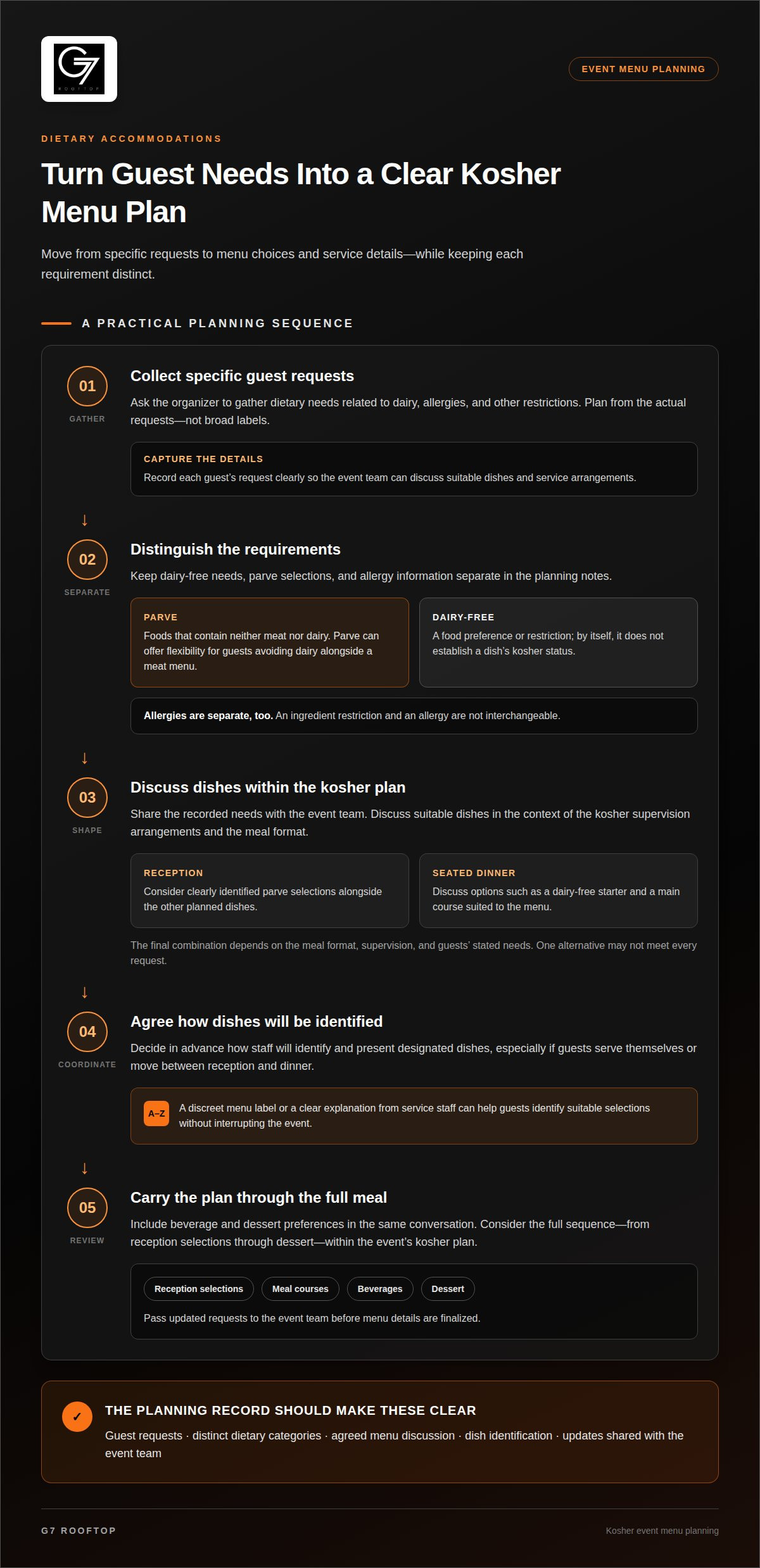
Dietary planning starts with specific guest needs, not broad labels. Ask the organizer to gather requests related to dairy, allergies, and other restrictions. A guest avoiding dairy may still eat meat, while another may need parve food. Those distinctions affect menu choices, service arrangements, and how dishes are presented.
Parve foods contain neither meat nor dairy. In a kosher meal plan, this category can offer flexibility for guests who need to avoid dairy while sharing a menu with meat dishes. Dairy-free describes an ingredient preference or restriction, but does not by itself establish a dish’s kosher status. Keep each requirement distinct in the planning notes.
Translate requests into clear menu information. For example, note whether a guest needs dairy-free food, parve dishes, or both. Record allergies separately, since an ingredient restriction and an allergy are not interchangeable. Share this information with the event team to discuss suitable dishes and service details within the kosher supervision arrangements.
Consider how each course works as part of the whole meal. A reception might include clearly identified parve selections alongside other planned dishes. A seated dinner could offer a dairy-free starter and a main course suited to the menu. The final combination depends on the meal format, supervision, and guests’ stated needs. Avoid assuming one alternative will meet every request.
- Guest information: Gather each dietary request through the event organizer.
- Menu planning: Separate dairy-free needs, parve preferences, and allergy information.
- Service details: Agree how staff will identify and present designated dishes.
- Changes: Pass updated requests to the event team before menu details are finalized.
Presentation matters, too. A discreet menu label or a clear explanation from service staff can help guests identify suitable selections without interrupting the event. Agree on the approach in advance, especially when guests will serve themselves or move between reception and dinner.
Include beverage and dessert preferences in the same conversation. A dairy-free dessert, for example, may suit some guests, but it should be considered within the event’s kosher plan. Discuss the full sequence, from reception selections through dessert, rather than treating accommodations as a single replacement dish.
For a focused conversation about event needs, share your dietary priorities with the planning team. Clear details help shape a menu discussion around the occasion, the supervision arrangement, and the guests who will gather around the table.
Payment, cancellation, and rescheduling terms
Put payment and change terms in writing before confirming the event. The agreement should identify the payment schedule, what each payment covers, and when each amount is due. Keep the event date, estimated attendance, menu plan, and service details alongside those terms so the planner and venue can work from the same information.
Cancellations or changes require three to seven days’ notice before the event date. Treat that window as a key planning deadline. The written agreement should explain how to give notice, who receives it, and how the date of notice is recorded. A phone conversation alone can leave uncertainty about the agreed change. Use a written message that identifies the event and requested action.
Rescheduling affects more than the calendar. A new date may alter room arrangements, the event schedule, menu selections, and staffing needs. The agreement should describe how a date change is handled and which details carry forward. If a company moves its dinner, for instance, document whether the guest estimate and meal format remain unchanged. Record revised terms together.
Payment details deserve the same precision. List the agreed amount, payment dates, accepted methods, and any balance deadline in the contract. The price depends on the event and is given after a quote request; cost factors include attendance, menu choices, service duration, and setup requirements. Avoid relying on a draft estimate as the final agreement. Keep the approved version with the company’s event records.
- Before signing: Match the event date, menu scope, and payment schedule.
- After a change: Record the requested adjustment and the resulting terms.
- Before the deadline: Send cancellation or rescheduling notice through the agreed channel.
Attendance changes can affect the planning details. Set a process for updating the guest estimate, then record the final figure alongside any menu or room adjustments. If a department adds attendees, for instance, document the revised count and related changes in one written update. This prevents outdated details from circulating among organizers.
Before the event, review the agreement against the latest schedule. Make payment milestones, cancellation timing, and rescheduling instructions easy to find. Give the finance contact and event organizer the same final document. A clear record supports practical decisions if plans shift and keeps attention on the guests and the occasion.
Venue and planner coordination
Start venue coordination with a clear date brief. Bring a preferred date and alternatives the company could accept. Include expected attendance, event format, and schedule priorities. This gives the venue useful context before room details are discussed. A reception, seated dinner, and presentation each place different demands on timing and space.
Next, assign one planning contact to coordinate updates. That person can share the current schedule, guest estimate, and agreed event details with the venue. If a presentation moves before dinner, for example, the room arrangement and service timing may need adjustment. Keep one current document so the company, venue, and event planner work from the same plan.
Plan the room around the guest experience. A seated dinner needs comfortable table access, while a reception benefits from open circulation and distinct gathering areas. If the evening includes speeches, identify where guests will focus and allow for them in the schedule. Share the sequence of arrivals, remarks, meal service, and other planned activities. Specific transitions help the room support the event.
Build the schedule around clear handoffs. The planner can coordinate guest arrival with welcome service, then allow time for guests to settle before remarks begin. The venue can use the agreed program to coordinate room access and service preparation. Include the planned finish and any event changes so the team understands the full flow.
- Date options: Share one preferred date and two alternatives.
- Attendance: Give the venue the current estimate and update it when plans change.
- Program: List arrivals, dinner, presentations, and entertainment in sequence.
- Room needs: Describe seating, guest movement, and presentation arrangements.
Communication matters most when details shift. If attendance changes, send the updated estimate to the venue and planner. If the company revises the program, circulate the new schedule rather than relying on verbal updates. A written record helps everyone distinguish current arrangements from earlier drafts. Date each revision to make the latest plan easy to identify.
Before event day, review the plan with the venue contact. Walk through guest arrival, room access, meal timing, and program transitions. Confirm that the room arrangement suits both dinner and any planned remarks. Keep responsibilities clear: the planner communicates the event sequence, while the venue coordinates its space and preparations. This review brings separate decisions together into one coherent evening.
Décor, setup, and service staff
Décor should complement the room, not obstruct its purpose. Begin with a brief describing the desired atmosphere, company branding, and program. A reception focused on conversation, for example, may call for open space and restrained table décor. A seated dinner may need coordinated place settings and a clear presentation area. Share these priorities before setup decisions are finalized.
Translate the brief into specific setup instructions. Note where guests enter, gather, and move between reception and dining areas. If the evening includes remarks, reserve a visible focal point and orient guest seating toward it. If guests will mingle, avoid arrangements that create narrow paths or crowd serving areas. A room plan helps the setup team understand what is needed.
Décor can shape the atmosphere without overwhelming the occasion. Choose a consistent palette, table accents, and lighting approach that suit the company’s event style. Branded menus or a modest welcome display can add a personal touch. Keep signage legible and place it where guests arrive. Record which items the planner supplies and which the venue arranges.
Service staff need the event schedule and a clear picture of the guest experience. Share the timing for arrivals, meal service, speeches, and other planned activities. A pause before remarks can give guests time to settle, while a reception followed by dinner needs a clear transition. When staff understand these moments, service can support the program.
- Room layout: Mark dining, gathering, presentation, and guest circulation areas.
- Décor: Record the palette, signage, table details, and branding priorities.
- Service flow: Share the schedule and any planned transitions with staff.
- Responsibilities: Identify who supplies each décor element and setup item.
Include practical setup details in the event plan. List the placement of welcome signage, menus, and presentation materials. Note whether décor should be ready before guests arrive and who handles last adjustments. If the company brings branded items, name them and specify their intended locations. A clear list prevents last-minute decisions from competing with guest service.
Review the room plan and service sequence together before the event. Ask the planner to align décor placement with guest movement and the program. For example, a display near the entrance should welcome guests without blocking arrival flow. To discuss the atmosphere and service experience you have in mind, share your event setup priorities with the planning team.
G7 Rooftop
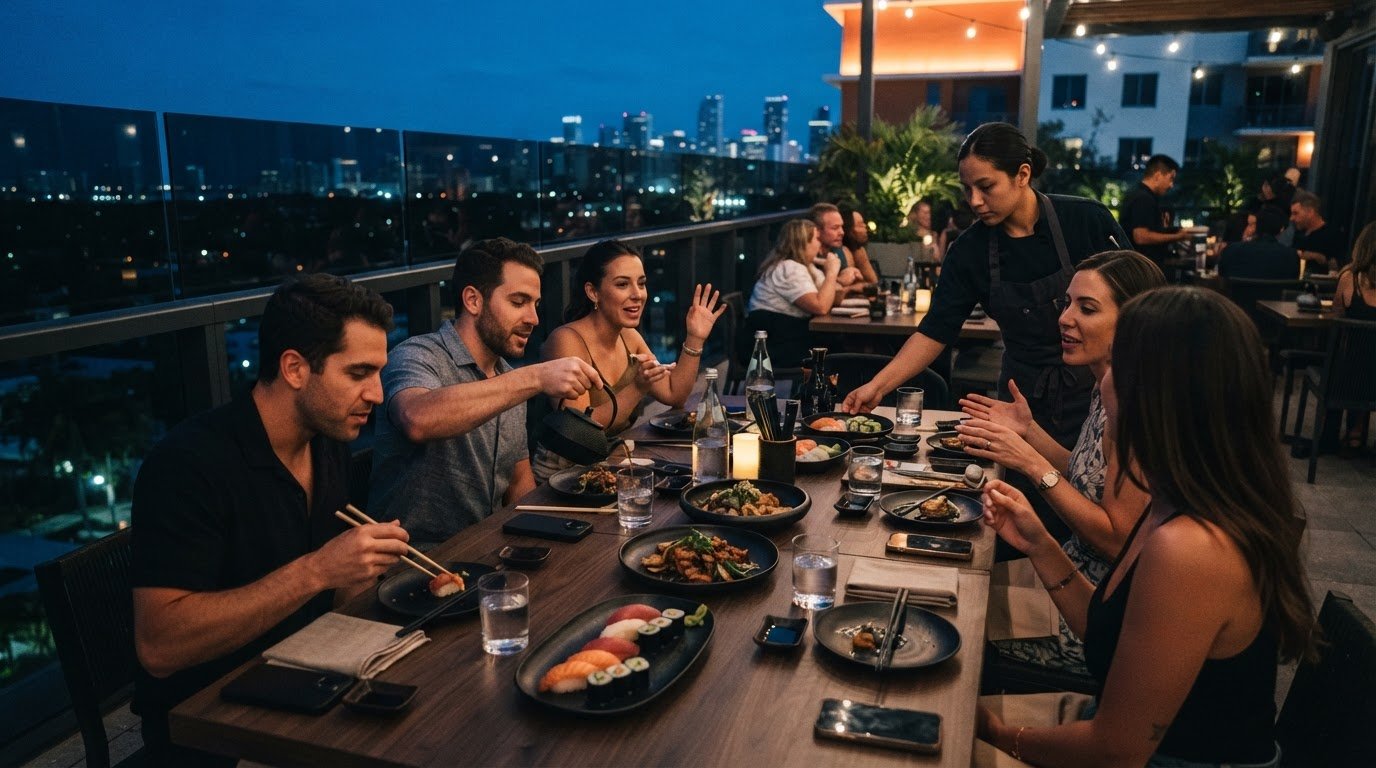
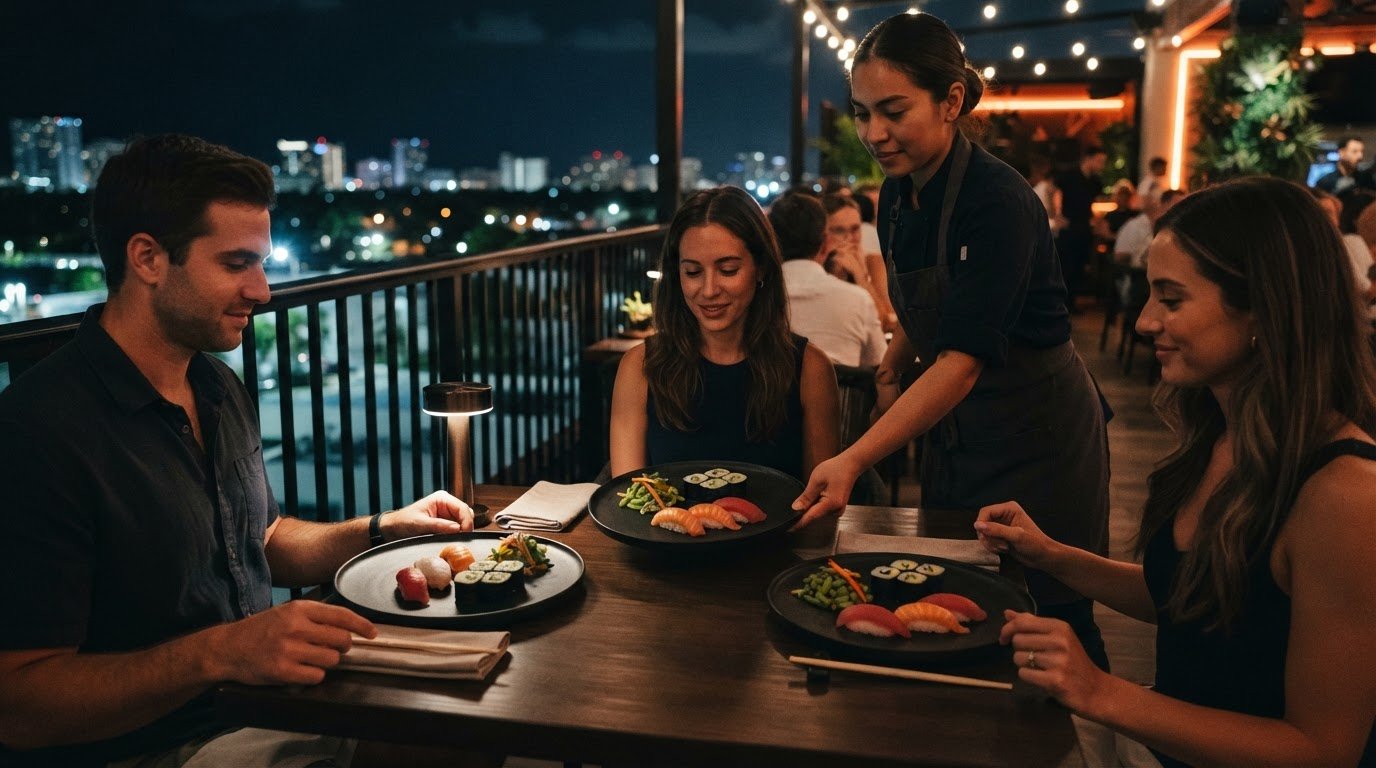
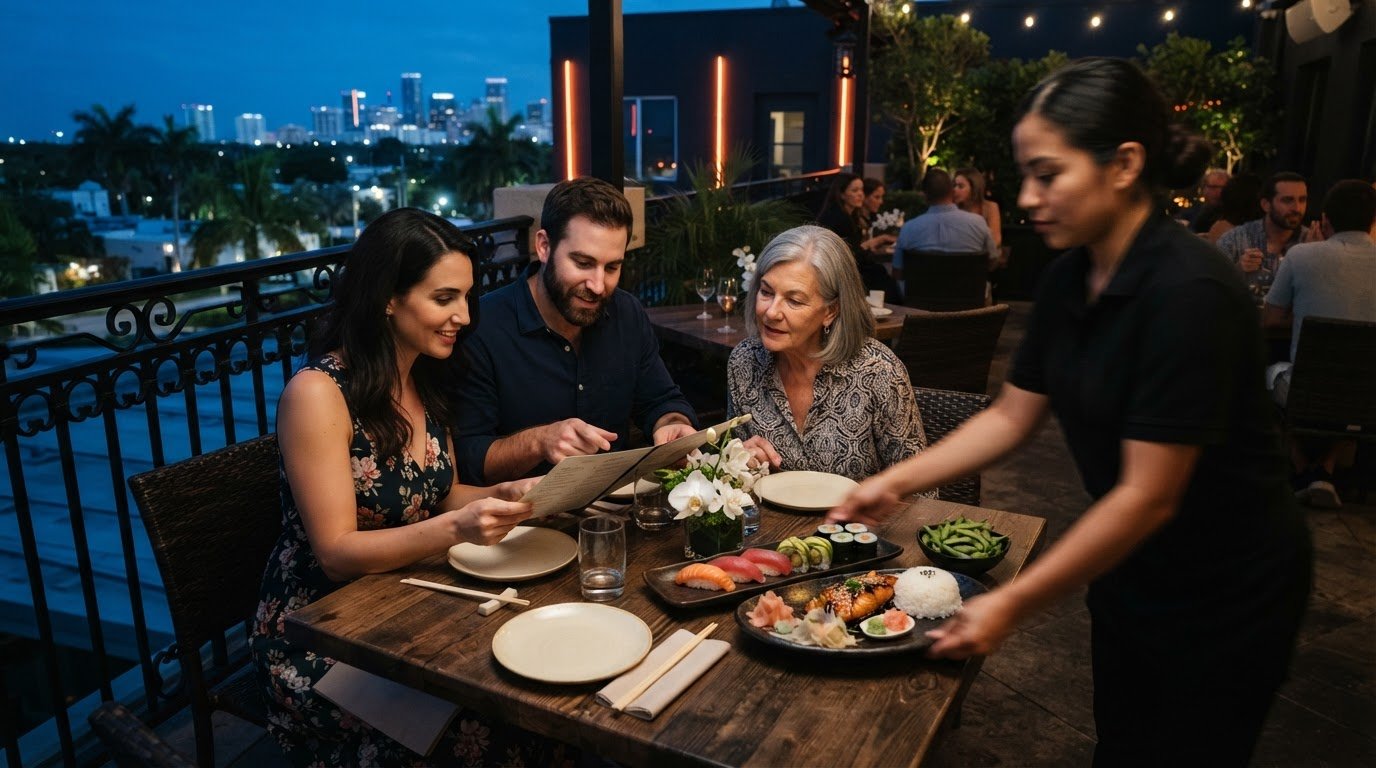
G7 Rooftop brings a kosher dining experience and rooftop setting into the conversation for a Miami corporate holiday celebration. Its Japanese-fusion menu and sushi offer a distinctive dining direction, while the elevated atmosphere gives the gathering a festive backdrop. Consider it when your priorities include kosher dining and a memorable venue in one setting.
As you shape the event, use your guest needs, schedule, and preferred atmosphere to guide the discussion. G7 Rooftop can be a natural next step for companies considering a kosher restaurant or rooftop venue for their celebration. Contact G7 Rooftop to discuss your event.
Shape a celebration your team will remember
Booking a kosher corporate holiday party in Miami is also an opportunity to express what your team’s year has meant. Let the gathering feel like more than a date on the calendar: choose a setting and mood that reflect the people you’re celebrating. A rooftop restaurant or rooftop bar can bring a distinctive sense of occasion to that shared moment.
G7 Rooftop offers a rooftop restaurant and rooftop bar for guests considering a celebratory Miami setting. As you move from planning to choosing the experience, picture the atmosphere you want colleagues to carry with them after the evening ends. A thoughtful setting can help make the occasion feel personal, polished, and worthy of the year’s achievements.
Contact G7 Rooftop about your event and take the next step toward a celebration shaped around your team.
Frequently Asked Questions
What Miami venues host kosher corporate holiday parties?
Miami-area kosher restaurants and suitable event venues can host corporate celebrations. G7 Rooftop is a kosher Japanese-fusion restaurant and bar in Hollywood, Florida, serving the greater Miami area. Its rooftop setting offers a distinctive backdrop, and its private-event form handles event inquiries. Consider how the location, food experience, and event format fit your company’s plans before choosing a venue.
What kosher certifications and supervision should a Miami event venue provide?
Ask for the supervising organization and the scope of its event coverage. At G7 Rooftop, the Orthodox Rabbinical Board supervises food preparation, ingredients, and kitchen operations. For an event plan, distinguish the general supervision arrangement from any guest-specific expectations, such as a particular kosher standard. Record the relevant details with the event terms so the company team understands the food service being planned.
Can a Miami venue accommodate glatt kosher, dairy, meat, or vegan requirements?
A venue’s ability to meet glatt, dairy, meat, or vegan requirements depends on its menu and supervision, and these terms describe different needs. G7 Rooftop offers a strictly kosher Japanese-fusion menu, including sushi and Asian-inspired dishes. Its stated menu information does not identify specific glatt, dairy, meat, or vegan options, so don’t infer one category from another when planning guest meals.
What deposits, cancellation terms, and minimums do Miami kosher event vendors require?
Deposit amounts and minimums depend on the vendor’s written event terms, so review those conditions before committing. Cancellations or changes require three to seven days’ notice before the event date. The agreement should state how to submit notice and how schedule or attendance changes affect the arrangement. Keep the final terms with the event record, rather than relying on an earlier estimate or conversation.
What questions should you ask before booking a kosher corporate holiday party in Miami?
Before booking a kosher corporate holiday party in Miami, ask who supervises the food, what the event coverage includes, and how guest dietary needs fit the menu. Also clarify which room arrangements and service details are included, how changes are recorded, and who coordinates updates on event day. These answers help your planning team understand the experience and responsibilities before finalizing the event.
How far in advance should you book a kosher holiday party in Miami?
Start by identifying a preferred date, alternatives, likely attendance, and supervision needs. The right lead time depends on the venue calendar, seasonal demand, and setup requirements; making decisions earlier leaves more room to coordinate.