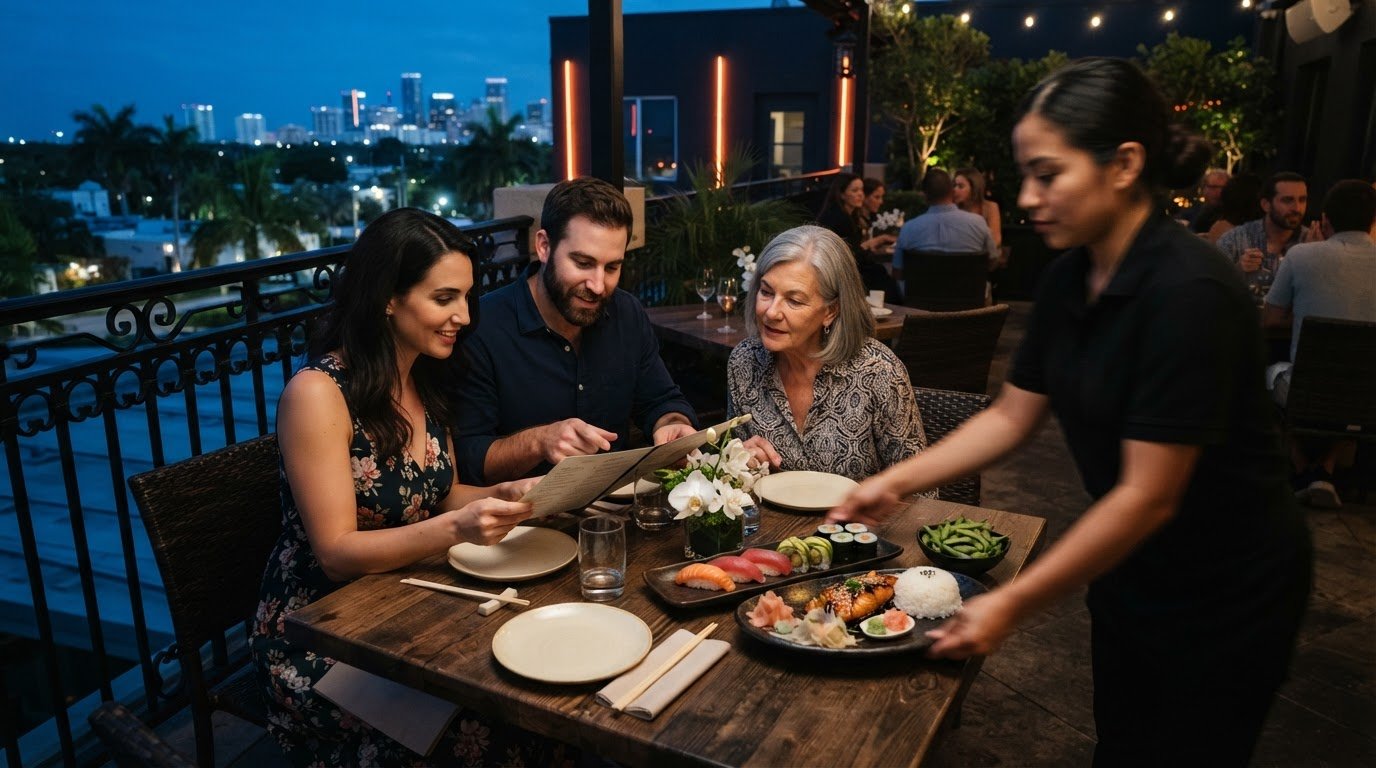
A kosher tasting menu in Fort Lauderdale can take the form of individually plated courses or a buffet. The right format depends on the pace and style of the meal. Kosher requirements also shape the menu: milk and meat are kept separate, and shellfish and pork are non-kosher.
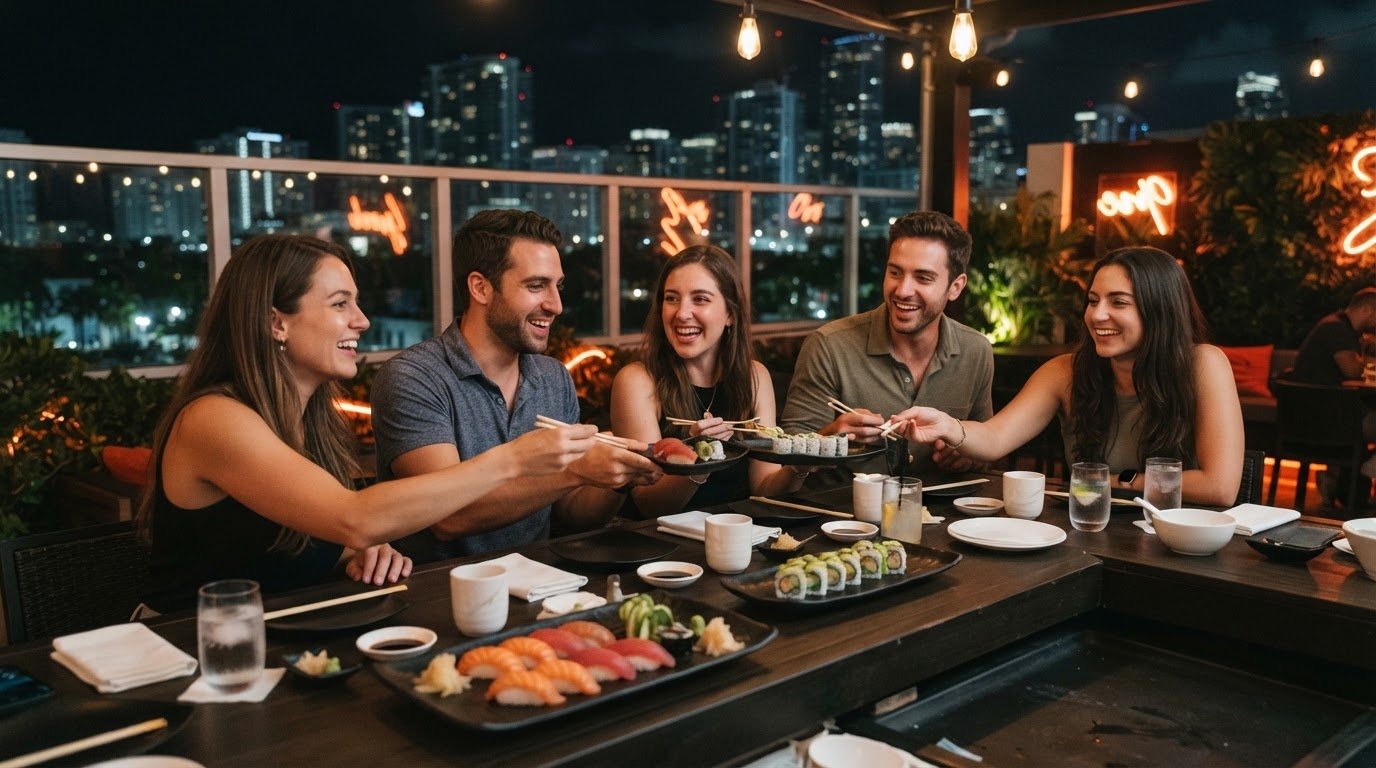
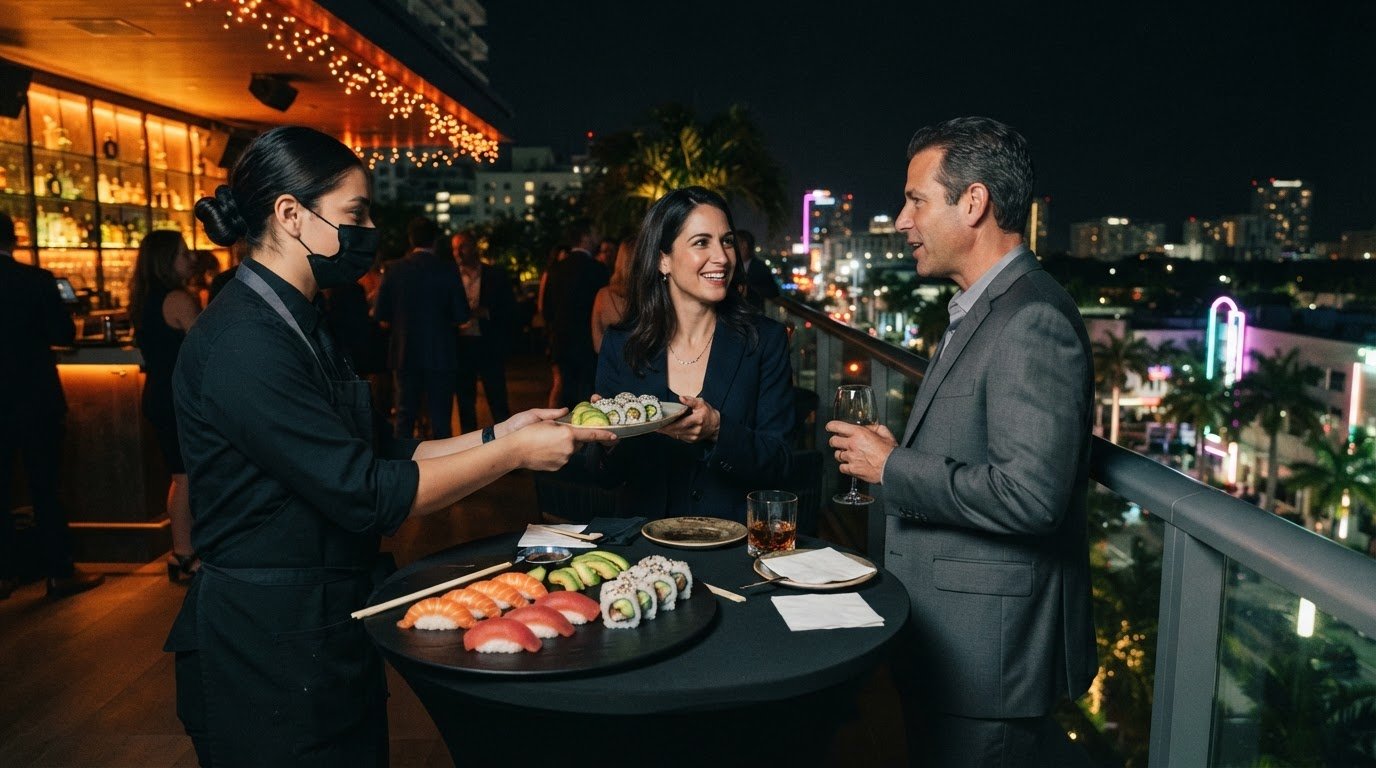
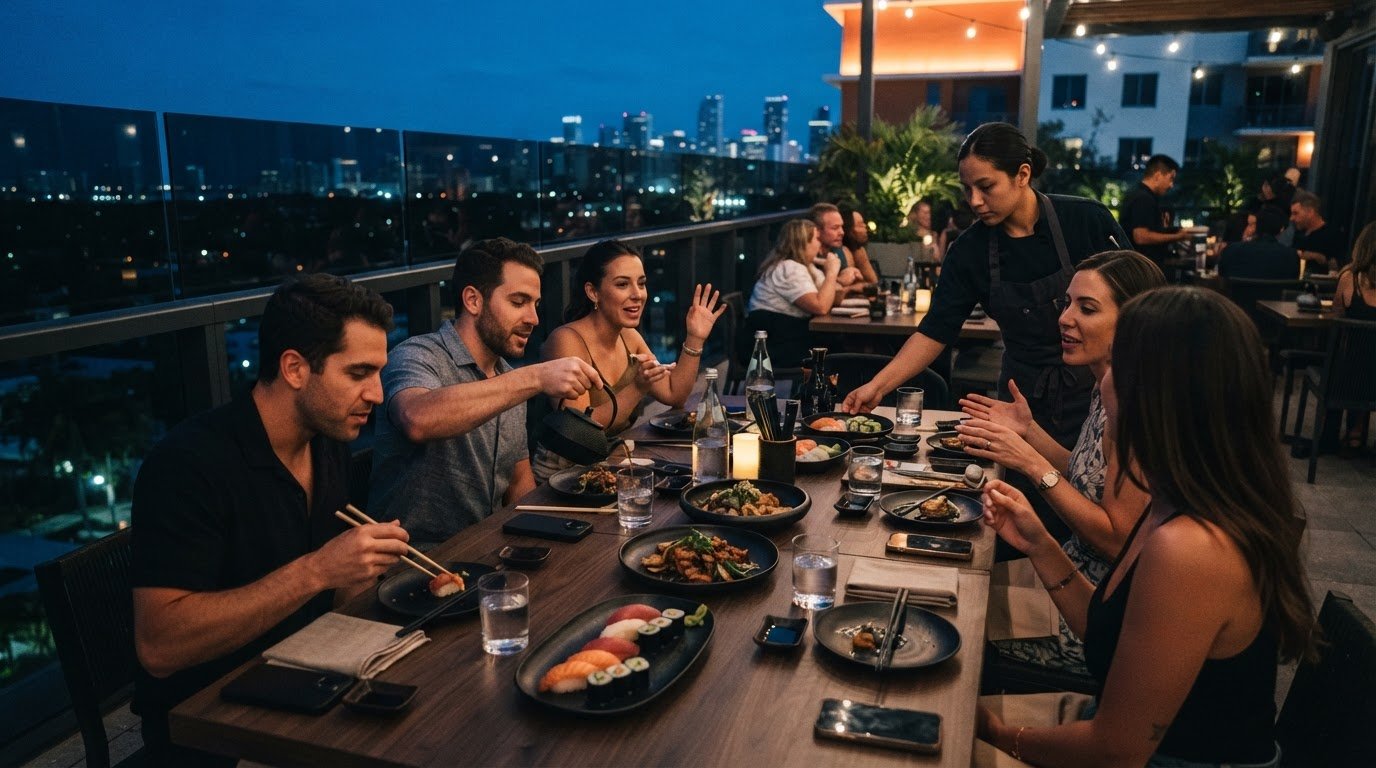
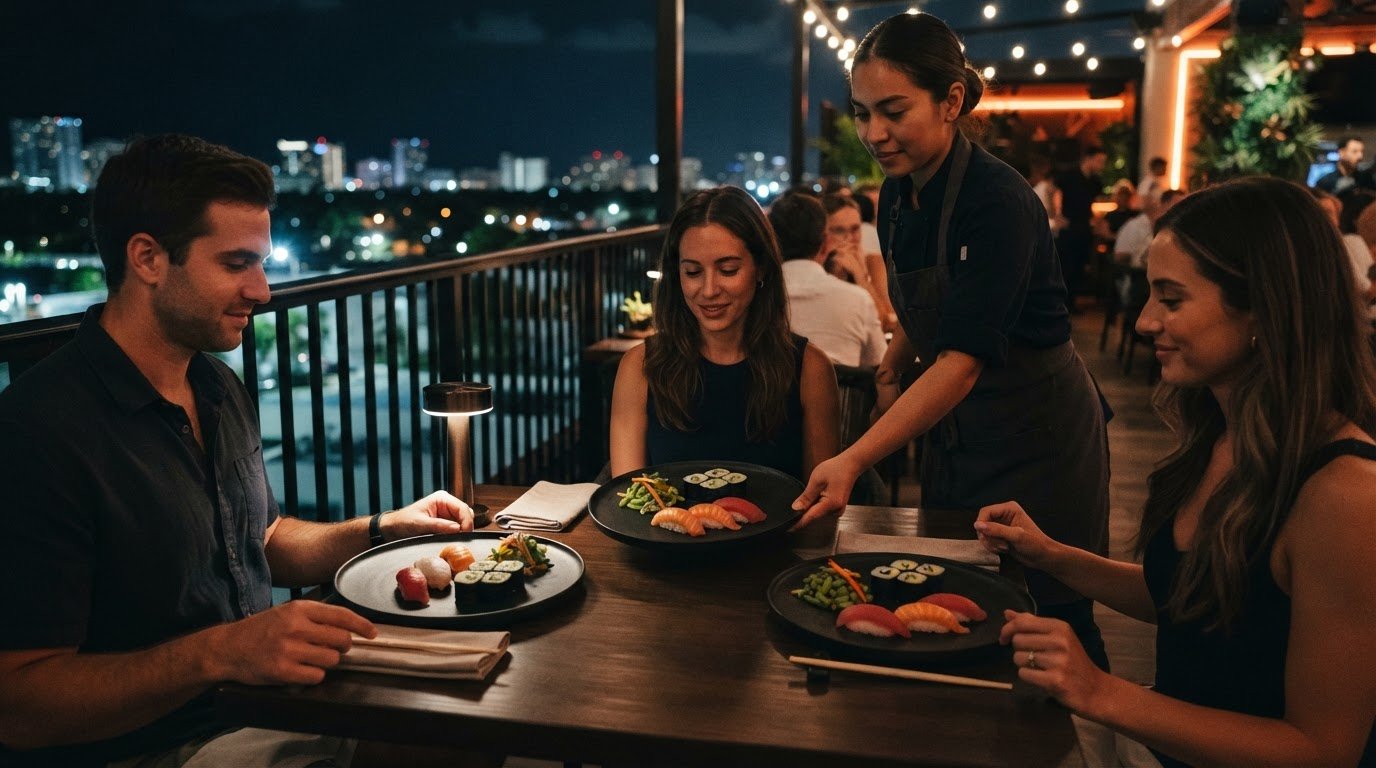
It’s natural to focus on what will appear on the table, but service style matters too. A buffet invites guests to choose from dishes arranged for sharing or selection, while plated service gives each guest a composed course. Both can make room for dietary considerations when the menu is planned around them. This article explains how the formats differ, what to consider for a group, and how kosher Japanese-fusion dining near Fort Lauderdale can bring tasting-menu discovery into an elevated rooftop setting.
Key Takeaways
- Compare buffet and plated service by the atmosphere, pacing, and guest experience you want.
- Understand how kosher dietary requirements influence menu planning and accommodations.
- See which details can affect reservation timing, including group size and the meal format.
- Learn what to consider when planning a meal around Shabbat, holidays, or a special event.
- Compare nearby dining options by cuisine, setting, and the kind of evening you want to create.
Dietary accommodations
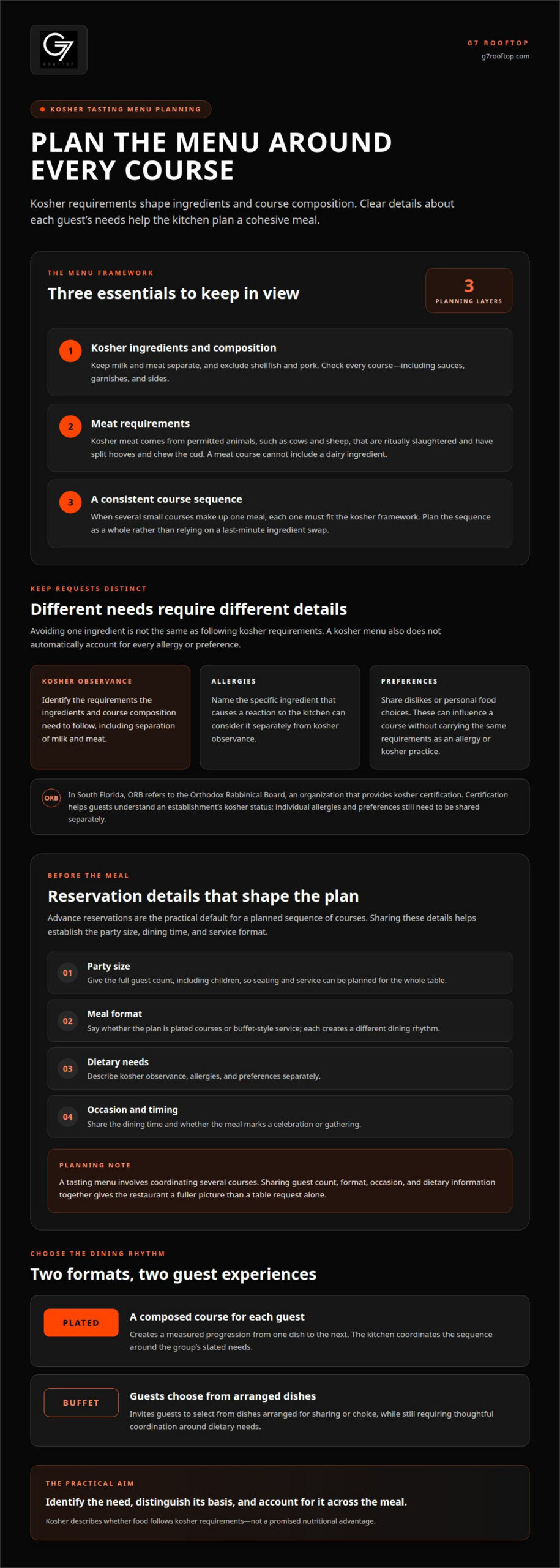
A kosher tasting menu requires attention to ingredients and how each course is composed. Kosher requirements keep milk and meat separate, and exclude shellfish and pork. These rules shape choices from the main ingredient to sauces, garnishes, and sides. When several small courses build one meal, every course must fit the kosher framework.
Kosher meat has specific requirements: it comes from permitted animals, such as cows and sheep, that are ritually slaughtered and have split hooves and chew the cud. That affects which meats can be served, while the separation of milk and meat shapes how courses are paired. A meat course, for instance, cannot include a dairy ingredient. A carefully planned sequence keeps the menu consistent throughout the meal.
Dietary needs are best addressed as a whole, not as a last-minute ingredient swap. One guest may avoid shellfish, while another needs a meal that follows kosher requirements. Those needs are not interchangeable: avoiding shellfish alone does not make a meal kosher, and a kosher menu does not automatically account for every allergy or preference. Clear information about each guest’s needs helps the kitchen plan.
- Kosher observance: The menu’s ingredients and course composition must follow the relevant kosher requirements, including the separation of milk and meat.
- Allergies: Guests should identify the specific ingredient that causes a reaction, so the kitchen can understand the request distinctly from general kosher observance.
- Preferences: A dislike or personal dietary choice can influence a course, but it doesn’t necessarily carry the same requirements as an allergy or kosher practice.
Planning a group meal can be more complex when guests have different needs. One guest might require a kosher meal, while another reports an allergy. The kitchen needs to distinguish these requests and consider their effect on each course. With a tasting menu, details include not only the main ingredient but also sauces, toppings, and other components. Sharing this information early helps shape a cohesive dining experience.
In South Florida, ORB refers to the Orthodox Rabbinical Board, an organization that provides kosher certification. Certification can help guests understand a food establishment’s kosher status. It doesn’t replace sharing individual allergies or preferences, which remain separate planning considerations. For menu planning, a menu overview gives guests a starting point for discussing dishes and course composition. The practical aim is clarity: identify the dietary need, distinguish its basis, then account for it across the meal.
Kosher food is not necessarily healthier, lower in calories, or higher in vitamins. The defining consideration is whether it follows kosher requirements, not a promised nutritional advantage. That distinction helps set realistic expectations. Whether service is plated or buffet-style, dietary accommodations depend on ingredients and how courses are planned. Clear details help the kitchen consider stated needs without confusing one dietary category with another.
Do Fort Lauderdale kosher tasting menus need reservations?
For a kosher tasting menu in Fort Lauderdale, advance reservations are the practical default, especially when the meal follows a planned sequence of courses. A reservation helps establish the party size, dining time, and service format before the evening begins. It isn’t the same as a guarantee that every menu or accommodation fits every request. The details guests provide shape the plan.
Consider a couple planning a plated dinner and a family arranging a shared buffet. Those occasions involve different pacing and table needs. A tasting menu also requires the kitchen to coordinate several courses, rather than prepare a single dish in isolation. Booking ahead gives the restaurant an opportunity to understand the occasion and organize service around the group’s expectations.
Reservation planning matters even more when the party includes different dietary needs. A guest might observe kosher requirements, while another has an allergy or a strong ingredient preference. These are distinct considerations. Share each need clearly as part of planning, so the restaurant can consider how it affects the menu and course sequence. The earlier those details enter the conversation, the more thoughtfully they can be considered.
- Party size: Give the full guest count, including children, so seating and service can be planned for the whole table.
- Meal format: Identify whether you’re planning plated courses or buffet-style service, since each creates a different dining rhythm.
- Dietary needs: Describe kosher observance, allergies, and preferences separately rather than grouping them into one general request.
- Occasion: Mention whether the meal marks a celebration or gathering, because that context can guide the experience.
For a small table, the key details may be the dining time and dietary needs. For a group, guest count and service format become more central. Plated courses create a measured progression from one dish to the next. A buffet gives guests more freedom to choose, while still requiring thoughtful coordination around the group’s needs.
Fort Lauderdale diners may also consider nearby Hollywood when choosing a kosher meal. The city matters less than the experience being planned: a quiet dinner, a celebratory gathering, or a tasting sequence with distinct courses. A reservation helps connect those preferences with practical details, including the party’s size and the meal’s format. Share the occasion and requirements together, rather than treating them as separate afterthoughts.
Bring the details together when planning: preferred date, guest count, service style, and dietary information. For example, a group seeking plated courses can share its timing needs alongside any allergy details. This gives the restaurant a fuller picture than a request for a table alone and helps clarify the coordination a multi-course meal may require.
There’s no single booking timeline that fits every Fort Lauderdale dining plan. A smaller party with a straightforward menu has different considerations from a large celebration with varied dietary needs. The scale of the group, the chosen service, and the complexity of the requests all influence planning. For a dining occasion, share your plans with the team so those details can guide the conversation.
Are kosher tasting menus in Fort Lauderdale available for Shabbat, holidays, or special events?
Shabbat meals, holiday dining, and special events depend on the occasion and the restaurant’s schedule. A regular tasting menu does not necessarily describe what is served for a particular event. Consider the date, listed dining hours, guest count, and service style together. For Fort Lauderdale diners, start by defining the occasion and the experience the group wants.
Shabbat planning has its own context. Guests may want a meal that fits their observance, while restaurants organize service according to their operating schedules. Those considerations need to meet before the menu and dining time are set. A Friday gathering, for example, may have different timing needs from a weekday dinner. Share the occasion and preferred schedule together, rather than treating the meal as an ordinary reservation.
Jewish holidays also bring distinct planning needs. Passover and Rosh Hashanah are different occasions, and guests may have specific expectations for each meal. The holiday name alone does not explain every guest’s practice or preference. Share the intended experience so a holiday gathering can be distinguished from a standard dinner, and consider menu composition, service style, guest count, and timing together.
Special events can suit plated service or a buffet, depending on the gathering. Plated courses create a composed progression for guests seated together; a buffet allows more flexibility for a social celebration. An anniversary dinner, for example, may suit a sequence of courses, while a family gathering may benefit from more movement and shared conversation. Let the occasion and atmosphere guide the format.
- Occasion: Name the specific date or celebration, such as Shabbat, Passover, Rosh Hashanah, or an anniversary.
- Timing: Explain the preferred dining window and any schedule considerations tied to the gathering.
- Service style: Indicate whether a seated progression or buffet-style meal better suits the guests.
- Guest needs: Describe dietary requirements individually, so they aren’t confused with general event preferences.
A tasting menu involves coordinating courses, and an event brings additional timing and group considerations. A small dinner can have a different rhythm from a reception where guests arrive at different times. The format also affects how guests experience each course. Sharing these details early gives the restaurant a clearer picture of the occasion.
For Fort Lauderdale diners, planning depends on the restaurant’s schedule, the requested service, and the occasion. A holiday date may call for a different arrangement from a regular dinner, while a special event may need a menu and flow suited to the group. A kosher meal near Fort Lauderdale feels more thoughtfully planned when occasion, timing, and service style are considered together.
Comparing Fort Lauderdale Kosher Menus to Nearby Cities
Fort Lauderdale, Hollywood, Boca Raton, and Miami form a useful regional frame for planning a kosher tasting meal. A city name alone doesn’t tell you whether a menu suits your group. Compare the cuisine, setting, service style, and travel plans together. That approach helps distinguish a destination dinner from the most convenient option for the occasion.
Start with the meal itself. One group may want sushi and Japanese-fusion dishes, while another prefers a different cuisine. A tasting menu’s appeal comes from how its courses work together, so consider the overall progression rather than one signature dish. In Fort Lauderdale, a guest might prioritize a nearby table and a relaxed evening. Someone comparing Miami may place greater weight on a particular culinary style or atmosphere.
Hollywood offers another point of comparison for diners near Fort Lauderdale. Instead of assuming the menus are alike, look at the experience each location represents. A rooftop restaurant, for example, pairs dining with an elevated setting, while another venue may emphasize a different atmosphere. The setting can change the character of a tasting meal, even when guests begin with similar expectations.
Boca Raton may enter the decision when guests are meeting friends or family from different parts of the region. In that case, travel convenience can matter as much as the menu. Consider where the group is coming from, how they’ll arrive, and whether everyone wants a leisurely multi-course dinner. A convenient location can make the evening easier to coordinate, while a distinctive menu or setting may justify choosing another city.
Miami provides a broader city comparison, but the useful question remains specific: which experience suits this occasion? A diner seeking sushi or Japanese-fusion cuisine may weigh those offerings differently from someone choosing primarily for the venue. A rooftop setting can shape the evening through its views and social energy. A quieter dining room may better fit guests who want conversation to lead.
- Menu identity: Compare the cuisine and course progression, such as sushi-led dishes against another culinary style.
- Dining atmosphere: Decide whether a rooftop scene, intimate meal, or lively gathering better suits the occasion.
- Group logistics: Factor in where guests are traveling from and how the party will meet.
- Kosher considerations: Look at the establishment’s kosher status and consider dietary needs separately.
These comparisons do not establish that one city has more choices or better menus. They help clarify what matters to your group. A celebration may prioritize a dramatic setting, while a dinner may favor easier travel and a preferred cuisine. The best fit is the place whose menu, atmosphere, and location align with the event.
For diners weighing Fort Lauderdale against Hollywood, Boca Raton, or Miami, make the comparison around the evening you want, not the city label alone. A kosher tasting menu can bring together cuisine, presentation, and setting in a considered sequence. Discuss your dining plans to explore an experience suited to your occasion.
G7 Rooftop
G7 Rooftop offers a kosher dining destination for guests weighing Fort Lauderdale and nearby cities. Located in Hollywood, Florida, it serves the greater Miami area with kosher sushi and Japanese-fusion cuisine in an elevated rooftop setting. For diners seeking a distinctive atmosphere alongside kosher dining, the setting brings a different dimension to a meal.
Explore the menu of kosher Japanese-fusion dishes as you consider the cuisine and dining experience that suit your plans. G7 Rooftop is a natural option when you’re looking for a kosher restaurant in the Miami area with rooftop ambience. Contact G7 Rooftop to discuss your dining plans.
Make Your Next Dining Occasion Distinctive
Let the occasion shape the experience you choose. A celebratory evening may call for rooftop atmosphere and lively conversation, while a more intimate gathering may benefit from a calmer pace. As you plan a kosher tasting menu in Fort Lauderdale, think about the mood you want guests to remember, along with the cuisine and setting that support it.
G7 Rooftop brings together the feel of a Miami rooftop restaurant, the energy associated with Miami rooftop restaurants, and the social setting of a rooftop bar. That combination can offer an elevated backdrop for a memorable evening, with the dining experience at its center.
Bring your occasion and preferences into the next planning conversation. Contact G7 Rooftop about your event, and begin shaping a gathering that feels considered, welcoming, and distinctly yours.
Frequently Asked Questions
Are there kosher restaurants in Fort Lauderdale that offer tasting menus?
Kosher dining is available in nearby Hollywood, though kosher status alone doesn’t mean a restaurant serves a tasting menu. G7 Rooftop offers kosher Japanese-fusion dining, including sushi and Asian-inspired dishes in an elevated rooftop setting. For a tasting-style evening, distinguish a planned progression of courses from dishes guests select individually. That format shapes the meal’s pace and how diners experience each course.
Which Fort Lauderdale kosher restaurants offer chef’s tasting menus or prix fixe menus?
G7 Rooftop is a nearby option for kosher Japanese-fusion dining in Hollywood. Its menu is arranged into categories including Tapas, Raw Bar, Sushi, Signatures, Sea, Land, Desserts, and Beverages. Those categories describe the menu’s range; “chef’s tasting” and “prix fixe” describe different meal formats. A tasting menu follows a curated course progression, while prix fixe refers to a set menu offered at a set price.
What are the hours, locations, and reservation policies for Fort Lauderdale kosher tasting-menu restaurants?
Advance reservations are the practical default, especially for a planned sequence of courses. Share the party size, service format, occasion, preferred date, and dietary needs when planning.